 Albania
 Argentina
 Australia
 Austria
 Belgium
 Bosnia and Herzegovina
 Brazil
 Bulgaria
 Canada
 Chile
Chile
 Colombia
 Croatia
 Czech Republic
 Denmark
 Estonia
 Finland
 France
 Germany
 Greece
 Hungary
 Ireland
 Italy
Italy
 Latvia
 Lithuania
 Luxembourg
 Mexico
 Moldova
 Montenegro
 Netherlands
 New Zealand
 North Macedonia
 Norway
 Philippines
 Poland
 Portugal
 Romania
 Serbia
 Slovakia
 Slovenia
 South Africa
 Spain
Spain
 Sweden
 Switzerland
 Turkey
 Ukraine
 United Kingdom
 United States of America



Parts of a Guitar – Guide for Beginners
Bridge, fret, nut, pickup – you read these words in every guitar guide but nobody ever explained them. A clear guide to the parts of a guitar.

Headstock and Tuning Pegs
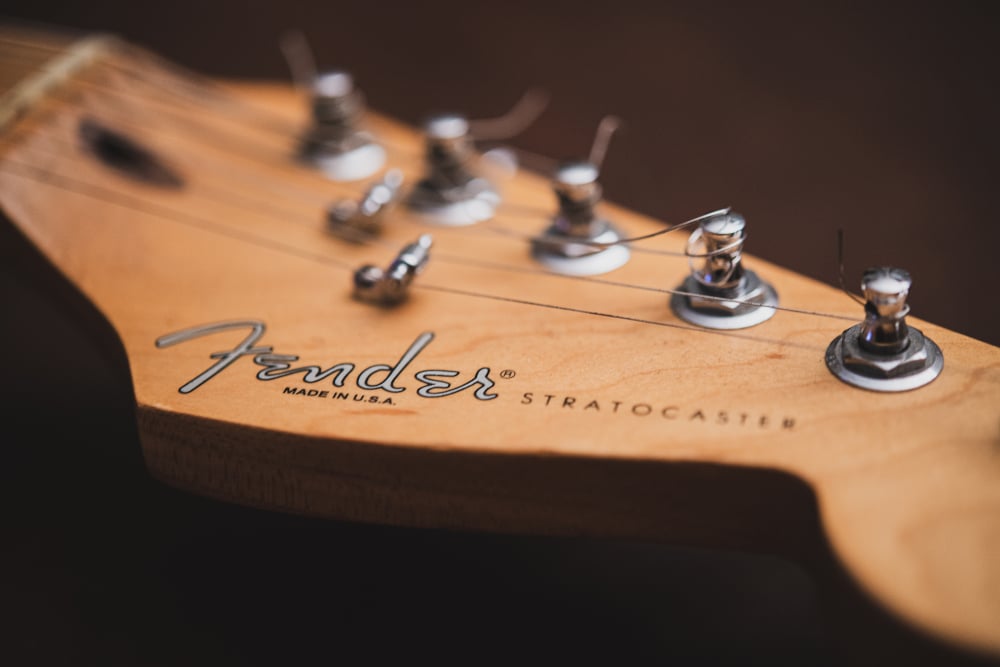
At the very top of the guitar sits the headstock – and on it are mounted the tuning pegs (machine heads). By turning the tuning pegs you tighten or loosen the strings, changing their pitch.Better enclosed-gear tuners (e.g. Grover or Gotoh) hold tuning much longer than cheap open-gear ones on budget guitars. If your guitar won't stay in tune, the tuners are often the culprit.
Nut – A Small Piece with a Big Impact
The nut is a small strip at the bottom of the headstock – where the neck meets the head. The strings pass through its slots; the nut determines their spacing and height above the fretboard (action).Why does it matter? If the nut is too high, the first frets are harder to press down – beginners get sore fingers faster and playing becomes frustrating. The material – plastic, bone, ebony or synthetic bone (TUSQ) – also affects tone transfer and tuning stability.
MUZIKERTIP: If your new guitar has stiff strings at the first frets, before buying a new guitar, have a guitar tech check the nut – the fix costs just a few euros.
Neck, Fretboard and Frets – Where All the Action Happens
The neck is the long piece that runs from the body of the guitar up to the headstock. The fretboard is the surface of the neck where you press your fingers. Metal strips are embedded in the fretboard – these are the frets.The fretboard material affects the feel and tone: rosewood sounds warmer, maple brighter and sharper. For beginners though, this doesn't matter much – comfort while playing is more important.

Fret Numbering and Positions on the Fretboard
Frets are numbered from the nut toward the body: the 1st fret is closest to the headstock. When a tutorial says "play a note at the 3rd fret", you press your finger into the space between the 2nd and 3rd metal strips – not on the metal strip itself.The higher the fret number (further from the headstock), the higher the pitch. Most acoustic guitars have 20–21 frets; electric guitars typically have 21–24.
Guitar Body and Bridge
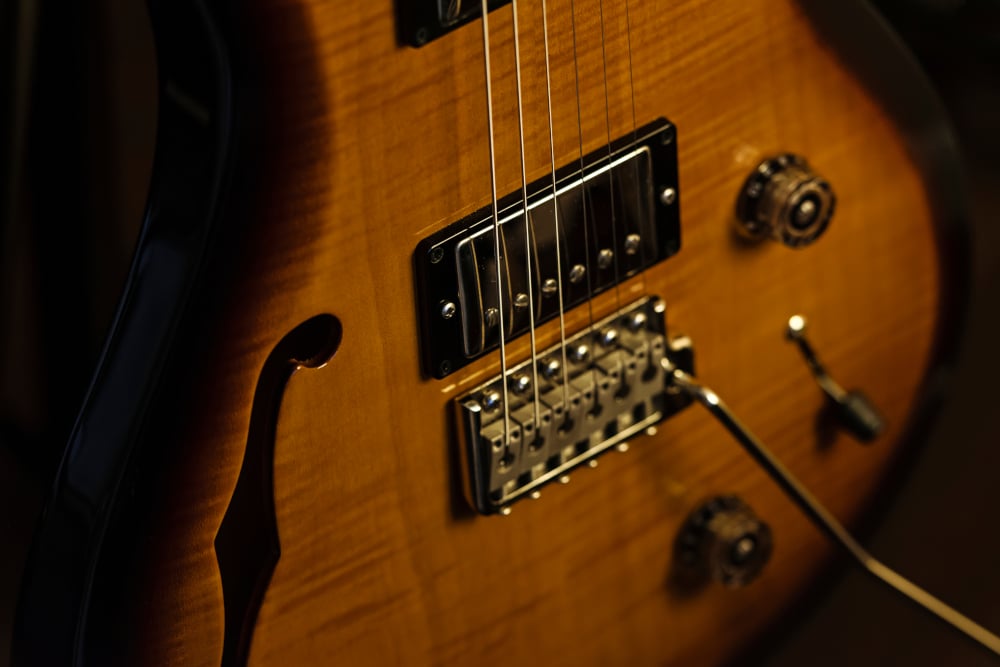
The body is the largest part of the guitar. On an acoustic guitar it's hollow – it acts as a resonance chamber that naturally amplifies the sound of the strings. On an electric guitar it's usually solid wood.The bridgeis the metal or plastic part on the body where the strings are anchored at their lower end. There are three basic types:
- Fixed bridge (hardtail) – simple, reliable, holds tuning well. Ideal for beginners.
- Vibrato / tremolo – a lever that lets you change pitch while playing. Takes some getting used to for tuning stability.
- Locking bridge (Floyd Rose) – for extreme whammy bar use, complex construction, for advanced players.
Pickups – Electric Guitars Only
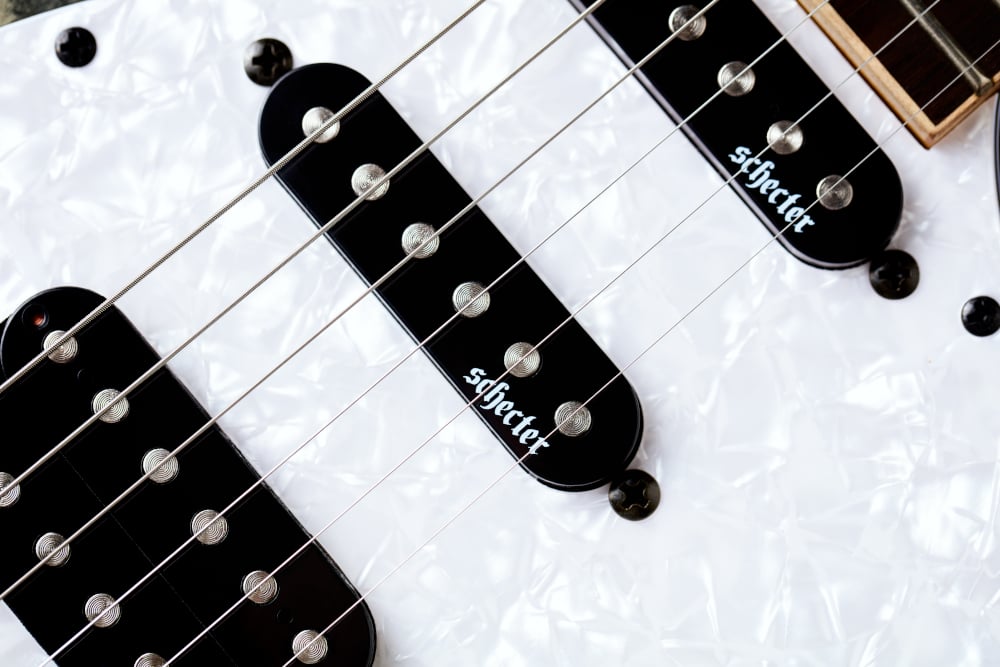
Pickups are electromagnetic coils positioned beneath the strings of an electric guitar. They capture the movement of the metal strings and convert it into an electrical signal that goes to your amp.There are two main types:
- Single coil (e.g. Fender Stratocaster, Telecaster) – clear, bright sound with a distinctive twang. Slightly prone to hum.
- Humbucker (e.g. Gibson Les Paul, SG) – fuller, warmer, more powerful sound. Cancels hum. Typical of rock and metal.
Browse our electric guitars to see which pickup type suits your style.
Now That You Know What's What
You now know every part of your guitar – that's a solid foundation. When choosing your first instrument, you'll know what to ask and what to look for. Browse our electric guitars, acoustic guitars or classical guitars and choose with confidence.And when you're ready for your first chords, our guide how to learn to play guitar will walk you through it step by step.