Albania
 Argentina
 Australia
 Austria
 Belgium
 Bosnia and Herzegovina
 Brazil
 Bulgaria
 Canada
 Chile
 Colombia
 Croatia
 Czech Republic
 Denmark
 Estonia
 Finland
 France
 Germany
 Greece
 Hungary
 Ireland
 Italy
 Latvia
 Lithuania
 Luxembourg
 Mexico
 Moldova
 Montenegro
 Netherlands
 New Zealand
 North Macedonia
 Norway
 Philippines
 Poland
 Portugal
 Romania
 Serbia
 Slovakia
 Slovenia
 South Africa
 Spain
 Sweden
 Switzerland
 Turkey
 Ukraine
 United Kingdom
 United States of America


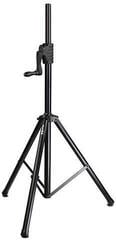
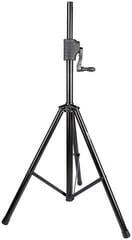
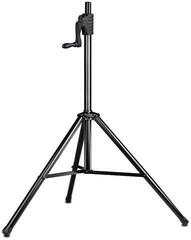
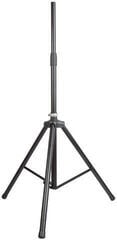
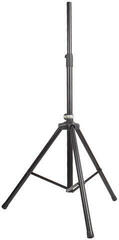
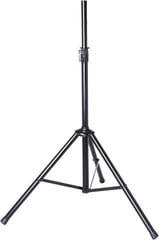
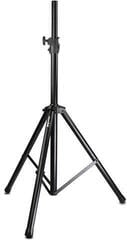
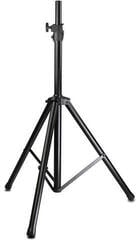
Loudspeaker Stands
A speaker stand raises and aims a speaker so the front rows of listeners do not block the sound. For mobile sound reinforcement, you also need a stable base, quick assembly and dimensions that fit in the car; permanent installations have different fixing requirements. Load capacity alone does not determine your choice: mounting socket diameter, working height, locking mechanism and the stand's own weight matter too. Every installation must follow the specifications of both the speaker and stand manufacturers.
Choosing the mounting type for your system
| Type | Use | What to check |
|---|---|---|
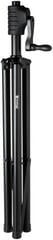
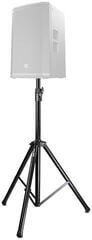
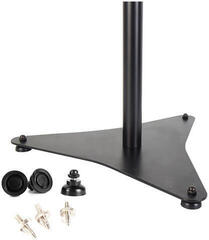
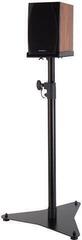
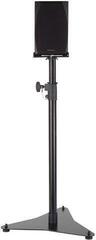
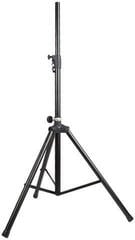
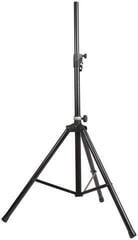
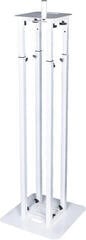
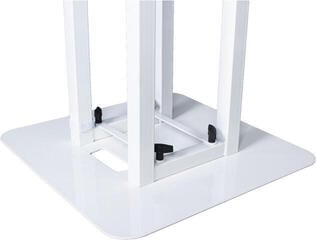
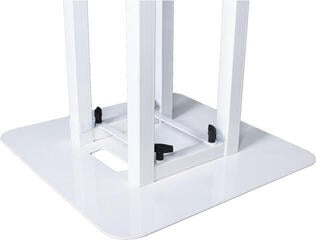
| Telescopic speaker stand | A standalone main speaker on stage or at a mobile event | Load capacity, height range, mounting socket and leg spread |
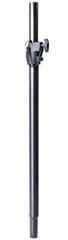
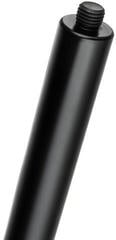
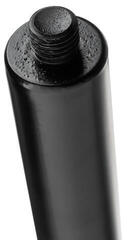
| Distance pole | A speaker above a subwoofer | Threads or sockets at both ends and the permitted load |
| Wall bracket | Permanent installation that saves floor space | Wall type, fixings, adjustment range and speaker approval |
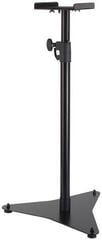
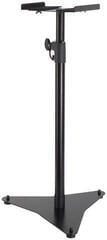
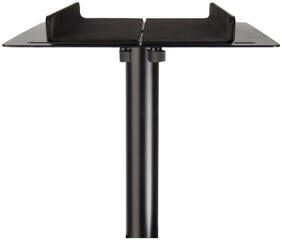
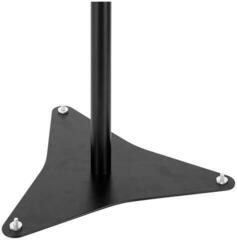
| Stand for a smaller monitor | Home workspace or nearfield listening | Top plate size, height, isolation and stability |
Load capacity is only the beginning
The load rating must safely accommodate the speaker's weight, but does not by itself confirm that the system is safe. The centre of gravity changes with height, ground slope, wind and how far the legs are extended. Do not hang bags or cables from the stand in a way that pulls it sideways. Outdoors, lower the height or stop using the PA if conditions exceed the manufacturer's stated safe operating limits.
Check the internal diameter and design of the mounting socket. Some speakers use a standard cylindrical fitting, while others use a thread or adjustable tilt. Use an adaptor only in the combination it is designed for. A loose connection can cause wobble, while an overly tight or forced-in part can be difficult to remove.
Height and sound direction
Height for the audience
For main PA use, raise the high-frequency driver above the heads of the standing or seated audience. The exact height depends on the cabinet design, dispersion angle and floor slope. If you raise the speaker too high without tilting it, the front rows may be off-axis. Conversely, a low speaker directs sound into listeners' bodies, reducing intelligibility at the back of the space.
Aiming without losing stability
Tilt the speaker downwards only with a manufacturer-approved socket or bracket. The speaker must not rotate on the pole in a way that strains the cable. With a pair of stands, begin with symmetrical placement, then walk through the space to check coverage. A small change in angle often produces a better result than another increase in volume.
Materials and locking mechanisms
- Steel construction: is usually durable, but the greater weight becomes noticeable with regular carrying.
- Aluminium construction: reduces the transport load; still compare the specific load rating and joint construction.
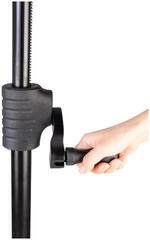
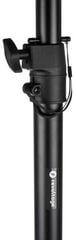
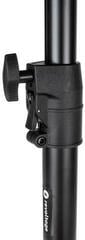
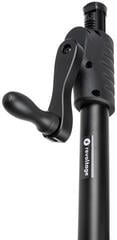
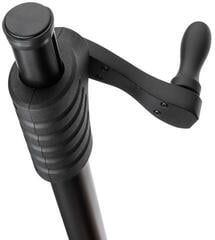
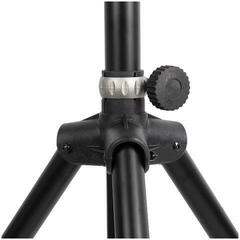
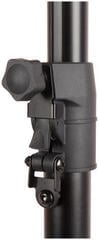
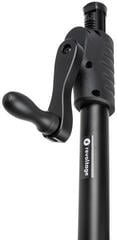
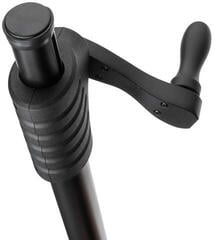
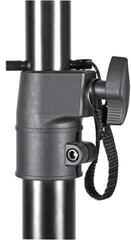
- Screw lock: clamps the telescopic section, but should not be the only safeguard if the stand also uses a safety pin.
- Safety pin: carries the load in one of the preset positions. Always insert it fully and secure it.
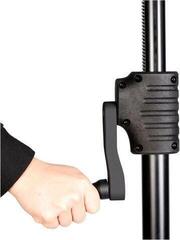
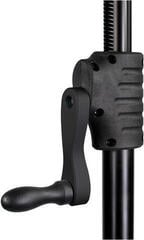
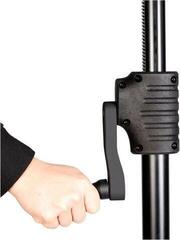
- Pneumatic assistance: makes raising or lowering easier, but does not replace correct handling technique.
Assembly step by step
- Choose firm, level ground away from the main walkway and escape route.
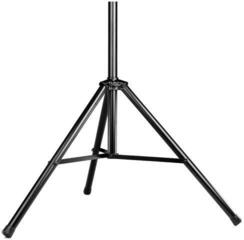
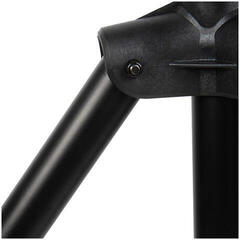
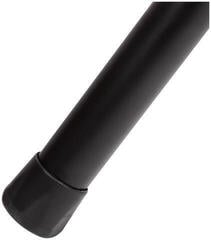
- Spread the legs to the specified width, tighten the mechanism and check every foot.
- Set a lower working height and insert the safety pin if the design includes one.
- Use two people to lift the speaker if its weight or handle positions require it.
- Once the speaker is in place, adjust the height, tighten the lock and check the assembly with a gentle, controlled movement.
- Route cables with strain relief and cover them where people walk.
Never lift a speaker onto an already extended pole unless you can maintain safe control over it. When dismantling, disconnect cables first and lower the telescopic section. Keep fingers clear of joints that slide together when released. Help from another person is a normal part of handling heavy equipment, rather than a sign of an unsuitable stand.
A distance pole above a subwoofer
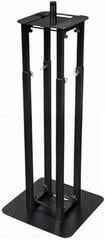
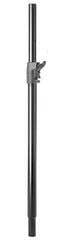
A pole takes up no additional floor space: the main speaker sits directly above the subwoofer. However, the subwoofer must have a designated socket or thread, and the manufacturer must permit the weight of the upper assembly. Check both ends of the pole: threaded and push-fit systems cannot be combined arbitrarily. Adjustable length helps position the high-frequency driver correctly, but a higher centre of gravity places greater demands on stability.
Permanent wall mounting
A wall bracket keeps the floor clear and the speaker in a fixed position. The anchors must suit concrete, solid brick, hollow masonry or the other supporting material; there is no universal solution. Installation should be carried out by a qualified person who accounts for weight, dynamic loads and secondary safety restraint. The speaker must have a manufacturer-designated mounting point, rather than just a handle or stand socket.
Plan cable routing and service access before drilling. An active speaker's control panel must remain accessible and its ventilation openings clear. Adjust its angle to direct sound towards the listening area rather than the ceiling or a smooth opposite wall.
Transport and regular inspection
A stand bag keeps the individual parts together and protects the car interior from their edges. Check the folded stand length, number of separate compartments, strap load capacity and closure type. A bag does not remove the weight; with several steel stands, splitting the load into two bags may be safer.
Before every event, inspect screws, rivets, safety locks, feet and any tube deformation. Clean dirty telescopic sections according to the manual and do not use lubricants the manufacturer does not recommend. After a fall or visible bending, take the stand out of service until a competent person has assessed its condition. Stand sockets and replacement parts must fit the particular system precisely.
For home use, a small footprint and appearance may take priority; on stage, quick setup and durability in transport matter more. Neither situation justifies exceeding the load rating or improvising fixings. Combining the speaker's specifications with working height, ground conditions and transport needs before choosing helps the stand do its job without unnecessary risk.