 Albania
 Argentina
 Australia
 Austria
 Belgium
 Bosnia and Herzegovina
 Brazil
 Bulgaria
 Canada
 Chile
Chile
 Colombia
 Croatia
 Czech Republic
 Denmark
 Estonia
 Finland
 France
 Germany
 Greece
 Hungary
 Ireland
 Italy
Italy
 Latvia
 Lithuania
 Luxembourg
 Mexico
 Moldova
 Montenegro
 Netherlands
 New Zealand
 North Macedonia
 Norway
 Philippines
 Poland
 Portugal
 Romania
 Serbia
 Slovakia
 Slovenia
 South Africa
 Spain
Spain
 Sweden
 Switzerland
 Turkey
 Ukraine
 United Kingdom
 United States of America



Electronic vs. Acoustic Drums – How to Choose?
Choosing the right kit is a key step for any drummer. Whether your heart beats for the raw sound of wood or you need to practice discreetly in a block of flats, making the right decision will save you a lot of stress and money.
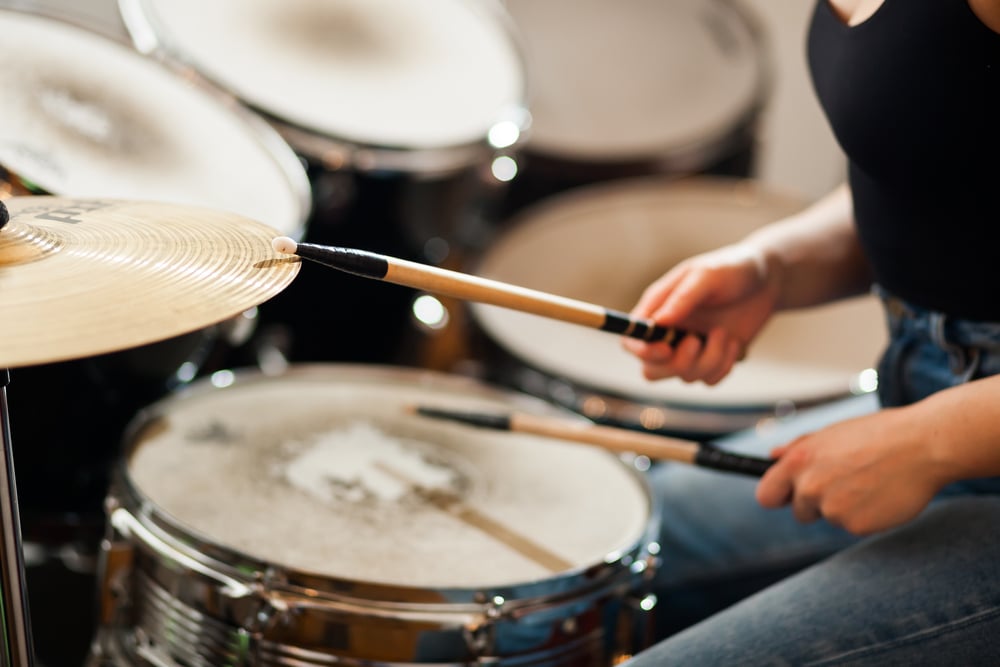
Electronic or Acoustic Drums?
A beginner drummer faces the same dilemma as a guitarist: electric or acoustic? With drums, this choice is even more important, because the wrong choice can complicate your practice, your family life, and your neighbourly relations all at once.Both types of drum kit are fully-fledged instruments. The choice depends primarily on your living space, budget and what you actually need drums for. Browse our drums, or read on to find out which type is right for you.
Drum kit types:
- Acoustic drums: wooden shells, alloy cymbals, live sound without electronics. Feel and dynamics that nothing can replace
- Electronic drums: pads with sensors, sound module, practise with headphones. Nearly silent, ideal for flats
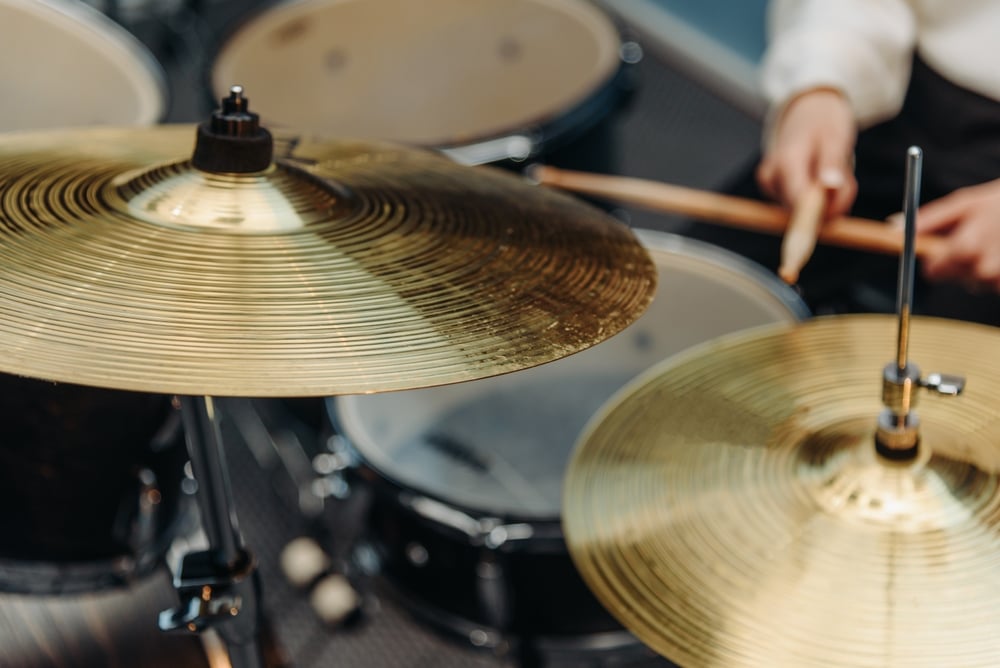
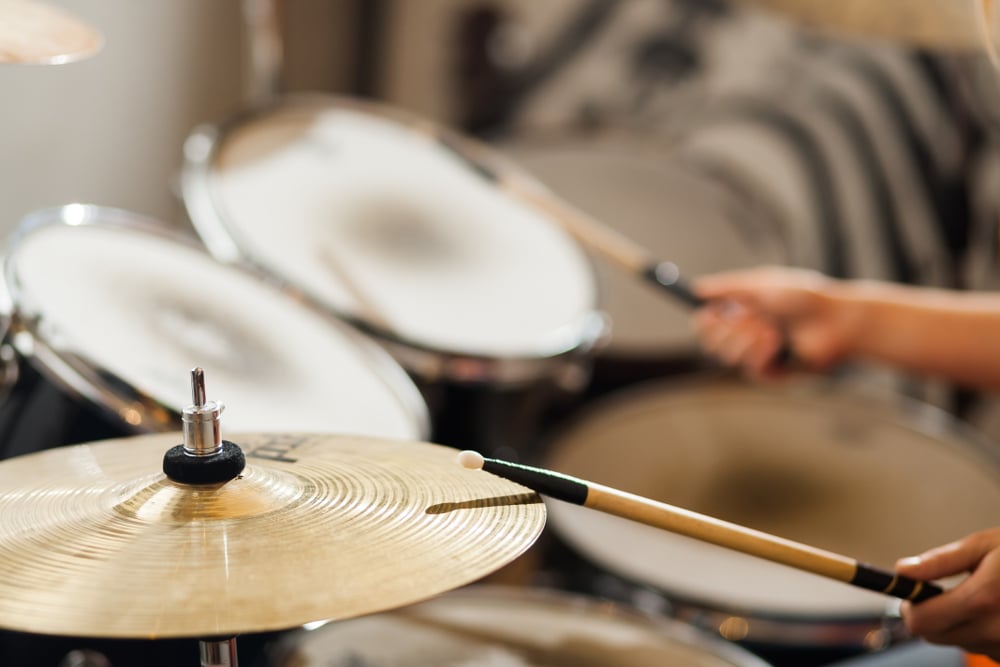
Acoustic Drums — Sound, Feel, Tradition
Acoustic drums are what most people picture in their mind when they say "drums". Wooden shells, alloy cymbals, mechanical pedals, and a sound you feel not just with your ears but with your whole body. It's precisely this physical feedback that electronic drums struggle to replicate.Features of acoustic drums:
- Resonance and dynamics: every hit sounds different depending on force and strike position; no module can replicate this precisely
- Cymbals: made from alloy and respond to every touch. With electronics, cymbals are rubber.
- Playing feel: the stick rebounds from the head completely naturally; with mesh pads the resistance is similar, but not identical
Acoustic drums are the right choice when:
- You have access to a rehearsal room, house or space where noise is not a problem
- You want to play live in a band or record with microphones
- Authentic feel and sound without electronic mediation matters to you
- You play genres where drum sound is key (jazz, metal, rock recordings)
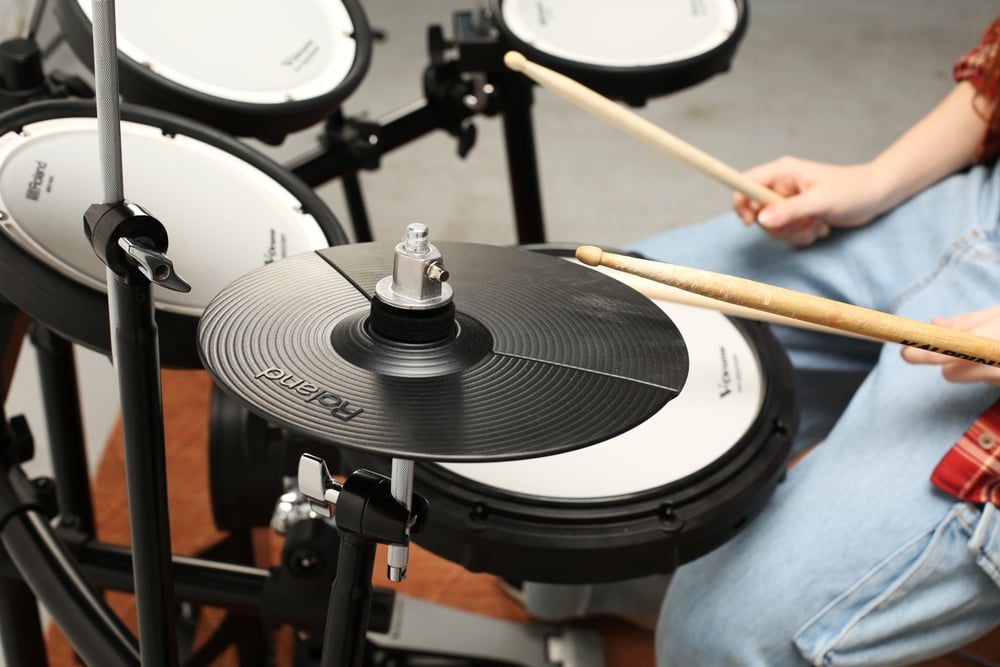
Electronic Drums — Silent Practice, Flexibility, the Future
Electronic drums changed the game for drummers living in flats, tower blocks and houses with thin walls. Instead of heads and cymbals you have pads (mesh or rubber) that sense every hit and send it to the sound module. You hear the result through headphones or a speaker, and the neighbours hear almost nothing.What sets electronic drums apart from acoustic:
- Mesh pads: the best electronic drums have mesh heads instead of rubber; rebound is closer to acoustic and vibrations are minimal
- Sound module: the brain of the kit. Contains dozens to hundreds of kit sounds (rock, jazz, latin...), metronome, practice tracks
- Connectivity: USB/MIDI, direct recording into DAW without microphones, Bluetooth to apps (Drumeo, Roland Cloud)
- Volume: mesh pads produce approx. 40–55 dB (whisper = 30 dB, normal speech = 60 dB). Not completely silent, but comparable to acoustic (110+ dB)
Electronic drums are the right choice when:
- You live in a flat, tower block or densely built area
- You want to practise any time: evening, morning, without worrying about neighbours
- You want to record directly to a computer without microphones or an audio interface
- You plan to play live with custom sounds or backing tracks
Acoustic vs. Electronic Drums — Comparison in One Place
| Acoustic | Electronic | |
|---|---|---|
| Sound | Live, natural, resonant | Samples via headphones/speaker |
| Volume | Very loud (100–120 dB) | Mesh pads ~40–55 dB |
| Playing feel | Natural head rebound | Mesh pads — very close feel |
| Cymbals | Alloy, full dynamics | Rubber pads, simulation |
| Recording | Microphones, audio interface, acoustics | USB/MIDI direct to DAW |
| Home practice | Noise limits practice time | Any time, even at midnight |
| Space | More space (full kit) | More compact |
| Entry price | From ~€300 | From ~€250 |
| Maintenance | Heads, cymbals (ongoing costs) | Minimal |
How to Choose Drums for Your Situation
I live in a flat or tower block
In a flat, the choice is clear: electronic drums with mesh pads. Rubber pads (cheaper electronic kits) are quieter than acoustic.If you're unsure, NRG, Roland TD-1KV and Alesis Nitro Max Kit are proven starter kits with mesh pads under €500. Both have a built-in metronome, practice track recordings and USB output.
I have access to a rehearsal room or house
With space available, you can comfortably go the acoustic drums route. Look for so-called starter packs — they include drums, cymbals and stands in one box. For most beginners in the €400–800 price range there's plenty of quality. NRG, Mapex Armory and Pearl Export EXX are long-time bestsellers in this category.If you want a compromise — a hybrid kit (acoustic with added electronic triggers) gives you live sound when playing acoustically, but the option to play through headphones too. It's not cheap, but it's the best experience from both worlds.
Frequently Asked Questions About Drums for Beginners
Are electronic drums really quiet?Not completely — but much quieter than acoustic. Mesh pads produce approx. 40–55 dB (whisper = 30 dB). The main noise source is the mechanical vibration of pedals into the floor. Solution: dampening platform or mat (Roland Noise Eater, DIY foam). A good electronic kit in a flat is realistic.
Will I learn better on acoustic or electronic drums?
It depends on your practice style. The physical feedback of acoustic drums is irreplaceable for technique. Electronic drums have the advantage of a built-in metronome, practice apps and instant recording — which is a huge help for self-taught players.
How much does a good starter kit cost?
Acoustic kit with cymbals: €400–700. Electronic kit with mesh pads: €300–600. Under €250 you get rubber pads without mesh — the feel is significantly worse. Don't compromise on pad type — it's the most important parameter.
Do I need to buy anything extra for electronic drums?
A basic kit usually doesn't include: headphones (min. €30–50), stool (€50–100), sticks (€10–30) and a mat under the kit. Budget an extra €100–200 on top of the kit price.
Can I start on electronic and switch to acoustic?
Yes — and it's a common path. Electronic drums as a starter for the flat, acoustic when you find space or a band. The technique will transfer; you'll just need a little time to adapt to the different feel of head rebound.
Whether you choose acoustic or electronic drums, don't forget quality drumsticks. Good drumsticks are essential for proper technique development and comfortable practice from day one.
Whether you're choosing your first kit for a flat or acoustic drums for the rehearsal room, at Muziker you'll find a complete range for every situation.
Browse our electronic drums (NRG, Roland, Alesis, Yamaha), acoustic drums (NRG, Pearl, Tama, Mapex, Sonor) and drumsticks and brushes. If you're not sure, our colleagues in the showrooms will be happy to help.