 Albania
 Argentina
 Australia
 Austria
 Belgium
 Bosnia and Herzegovina
 Brazil
 Bulgaria
 Canada
 Chile
Chile
 Colombia
 Croatia
 Czech Republic
 Denmark
 Estonia
 Finland
 France
 Germany
 Greece
 Hungary
 Ireland
 Italy
Italy
 Latvia
 Lithuania
 Luxembourg
 Mexico
 Moldova
 Montenegro
 Netherlands
 New Zealand
 North Macedonia
 Norway
 Philippines
 Poland
 Portugal
 Romania
 Serbia
 Slovakia
 Slovenia
 South Africa
 Spain
Spain
 Sweden
 Switzerland
 Turkey
 Ukraine
 United Kingdom
 United States of America



Clip-on vs. pedal tuner
Why does the type of tuner matter?
An out-of-tune guitar is either a tragedy or a comedy. It depends on where the audience is sitting. There are several kinds of tuner and each one wins in a different situation. Practising at home calls for something else than standing on stage. We will go through the three main types and tell you at the end what to buy first. If you have never tuned before, start with our guide on how to tune a guitar.
Clip-on tuner: quiet, reliable, always at hand
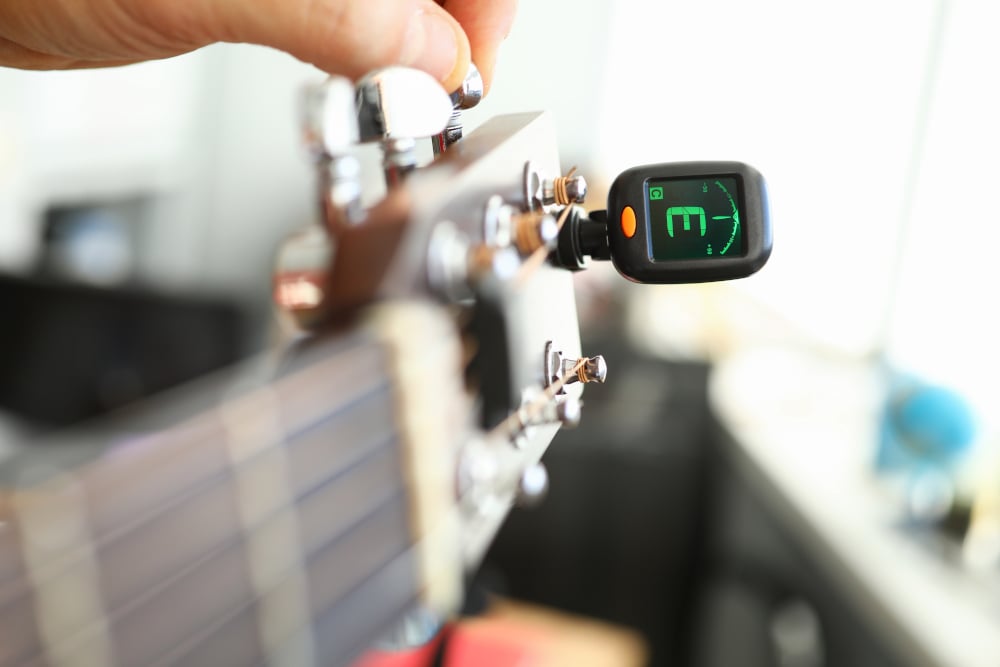
A clip-on tuner attaches straight to the headstock and reads the vibration of the wood, not sound through a microphone. That is its key advantage. It works in a noisy room too, backstage before a gig or in a hall where ten people are tuning at once.
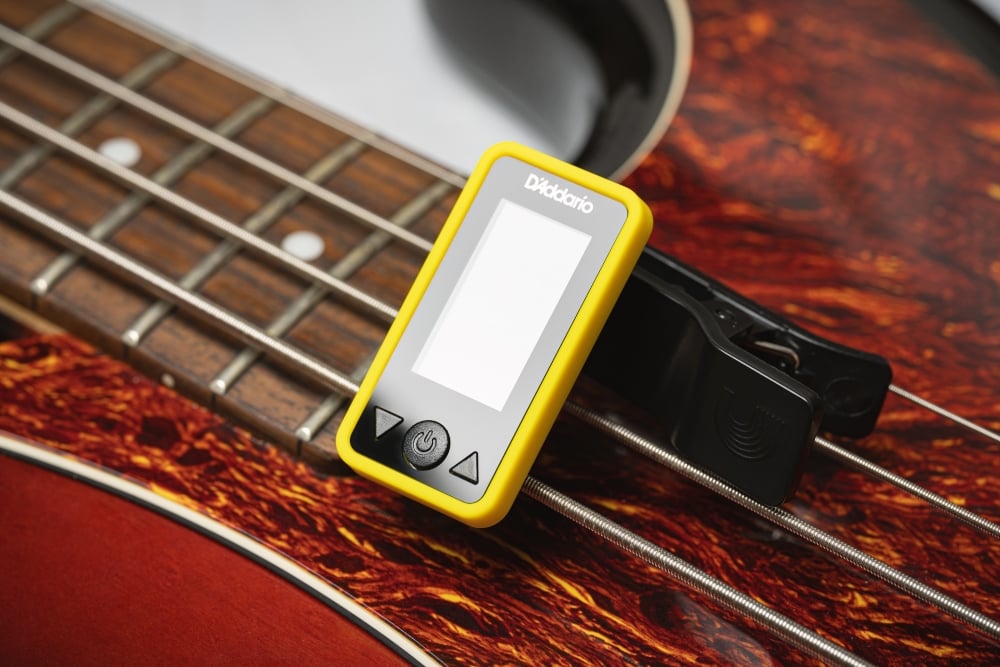
A great choice for beginners are the Revoltage models. For example the Revoltage CLT-1 (standard battery, around 10 €) or the Revoltage CLT-5 with USB charging if you would rather not deal with batteries. Both have a rotating colour display and ±1 cent accuracy, which is more than enough for a guitarist. If you want something more premium, there is the Revoltage CLT-6 with a rounded compact body. Besides Revoltage, proven models include the Korg PC-2, Snark SN-5X and D'Addario NS Micro.
Best for: acoustic and classical guitar, beginners, home practice, quieter gigs. It works just as well on ukulele and bass guitar.
Browse the full range of clip-on tuners.
Pedal tuner: for the stage and the pedalboard
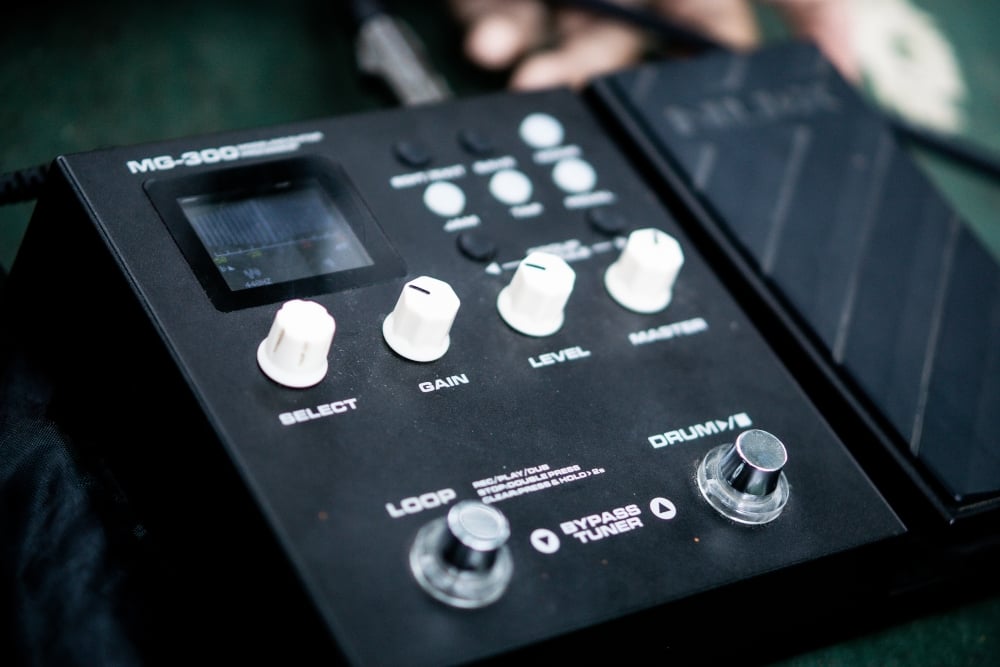
A pedal tuner (for example the Boss TU-3, TC Electronic Polytune 3 or Korg Pitchblack+) sits in the signal chain between the guitar and the amp. Step on it and it mutes the output. You can tune on stage without the audience hearing an out-of-tune string.
The TC Electronic Polytune 3 goes further. One strum checks all six strings at once and shows you immediately which one is off. On stage that is a lifesaver.
Prices run from 50 to 100 €. It is an investment that makes sense once you have a pedalboard or play live regularly. For where it belongs among the other pedals, see our guide to building a pedalboard.
Best for: electric guitar, players with a pedalboard, live shows. Browse pedal tuners or all guitar effects. If you are putting a whole rig together, have a look at guitar amps too.
Phone app: the free backup
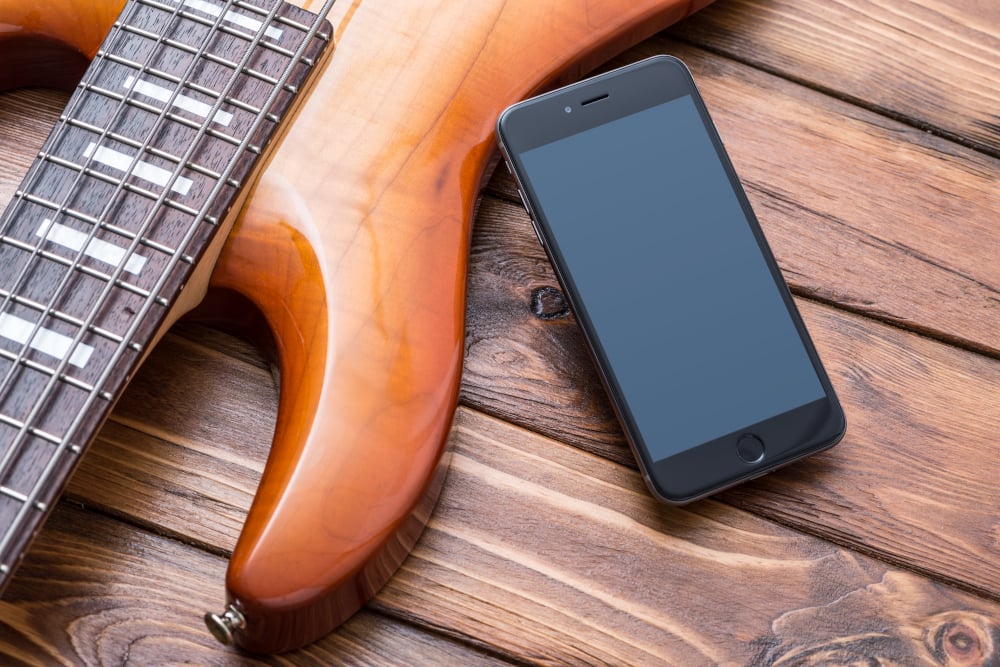
Apps like GuitarTuna and Fender Tune are free, install in 30 seconds and use your phone microphone. In a quiet room they work brilliantly. In noise they fall apart, because they pick up everything around them.
Treat them as an emergency backup or as a stopgap for your first days of playing until a proper tuner arrives. The same applies to metronomes. An app will do, hardware is more dependable.
Side by side
Clip-on tuner | Pedal tuner | Phone app | |
|---|---|---|---|
Price | 8–12 € | 50–100 € | free |
Noisy room | ✓ yes | ✓ yes | ✗ no |
Mutes output | ✗ no | ✓ yes | ✗ no |
For acoustic | ✓ ideal | only with a jack | ✓ yes |
For pedalboard | no | ✓ ideal | ✗ no |
Ease of use | ✓ highest | ✓ easy | ✓ easy |
So what should you buy?
If you are a beginner or mostly play at home, a clip-on tuner is all you need. Try the Revoltage CLT-1 as a basic option or the Revoltage CLT-5 with USB charging. Both are cheap, reliable and fit any guitar in a second.
Once you build a pedalboard, a pedal tuner joins it as a matter of course. Until then a clip-on has you covered.
Browse the full range of tuners. And when it is time for new strings, read how to choose guitar strings. Fresh strings go out of tune for the first few days, so the tuner earns its keep daily.
If you are filling out your kit, take a look at picks, capos and the rest of our guitar accessories.
Frequently asked questions about tuners
How do you tune a guitar without a tuner?
You can, but only roughly. You tune the guitar against itself: the fifth fret of the sixth string should sound the same as the open fifth string. Carry on the same way across the strings, with one exception on the third string, where you compare the fourth fret. The catch is that the whole guitar may sit slightly off against the rest of the band. Fine for practising at home, not fine for playing with anyone else. The full method is in our guide on how to tune a guitar. And if you play with a capo, check the tuning again after you clamp it on. A capo presses the strings down and pulls the guitar slightly sharp.
Does a clip-on tuner work on a ukulele?
Yes. A clip-on tuner reads the vibration of the wood, so it makes no difference whether you clip it on a guitar, a ukulele, a violin or a banjo. Most models have a mode switch. For ukulele look for the "U" mode or the chromatic mode, which tunes anything. The Revoltage CLT-1 and CLT-5 both handle ukulele. For the tuning itself, see how to tune a ukulele.
How does a clip-on tuner work?
It clips onto the headstock and a piezo sensor inside reads the vibration of the wood. The display shows which note you are playing and whether it sits below or above where it should. Because it does not listen to the air, ambient noise does not bother it. That is the main difference from a phone app, which goes through the microphone. If your guitar keeps drifting even after tuning correctly, the problem is elsewhere and a guitar setup will help.