 Albania
 Argentina
 Australia
 Austria
 Belgium
 Bosnia and Herzegovina
 Brazil
 Bulgaria
 Canada
 Chile
Chile
 Colombia
 Croatia
 Czech Republic
 Denmark
 Estonia
 Finland
 France
 Germany
 Greece
 Hungary
 Ireland
 Italy
Italy
 Latvia
 Lithuania
 Luxembourg
 Mexico
 Moldova
 Montenegro
 Netherlands
 New Zealand
 North Macedonia
 Norway
 Philippines
 Poland
 Portugal
 Romania
 Serbia
 Slovakia
 Slovenia
 South Africa
 Spain
Spain
 Sweden
 Switzerland
 Turkey
 Ukraine
 United Kingdom
 United States of America



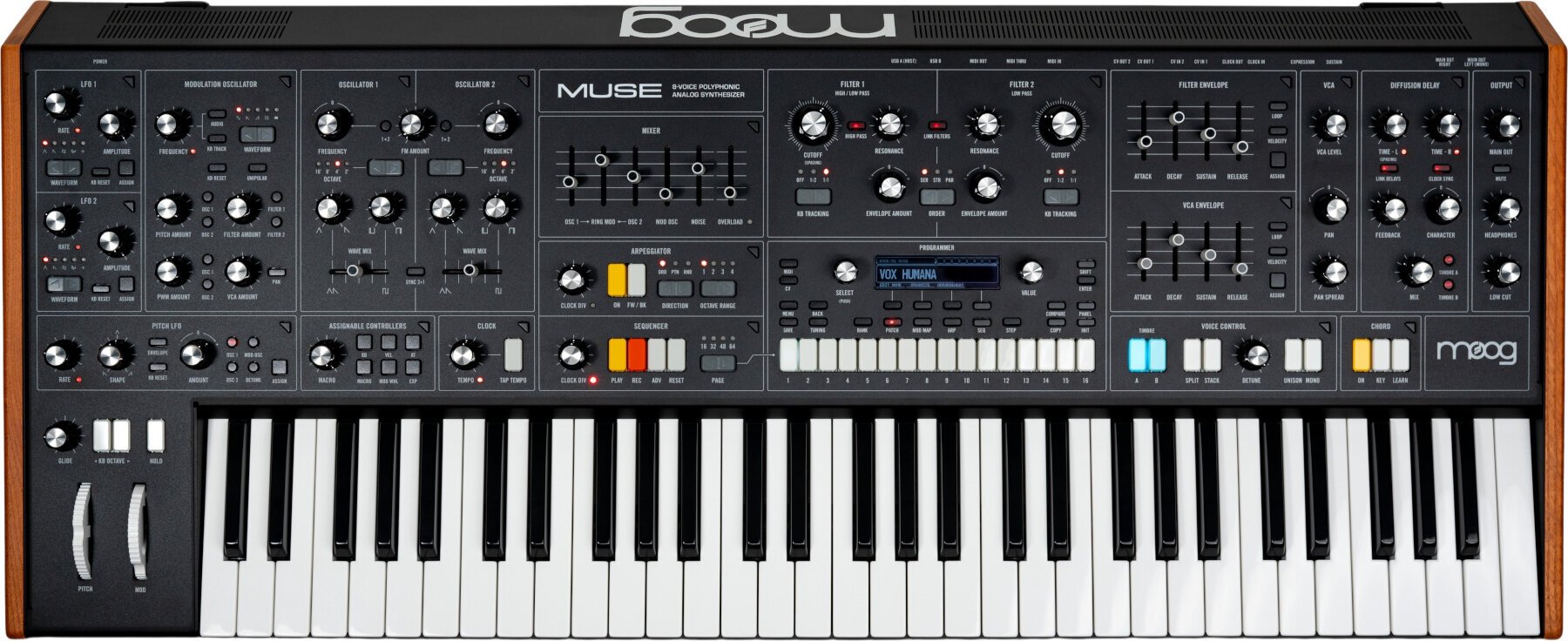
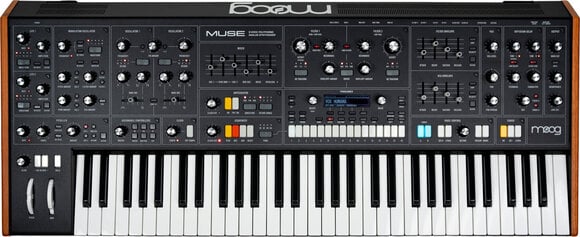
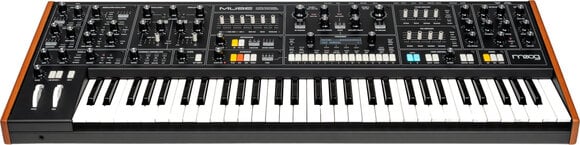
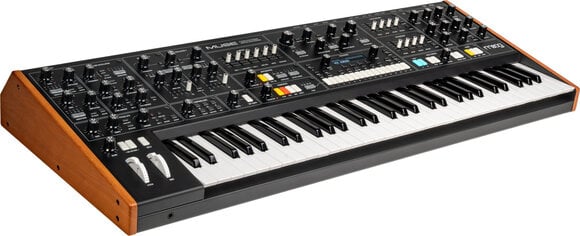
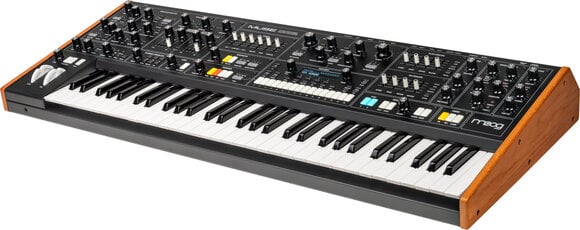
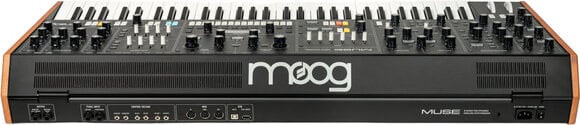
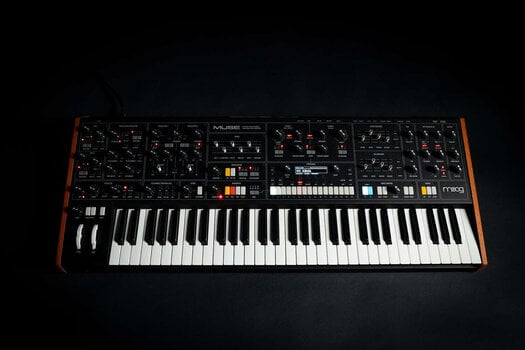
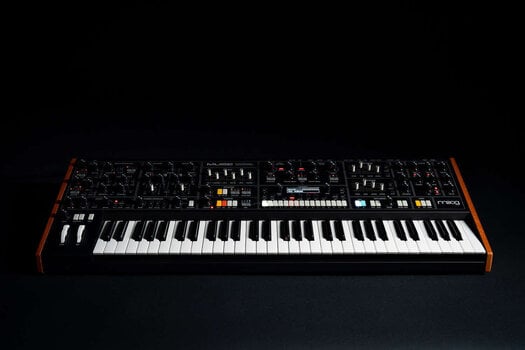
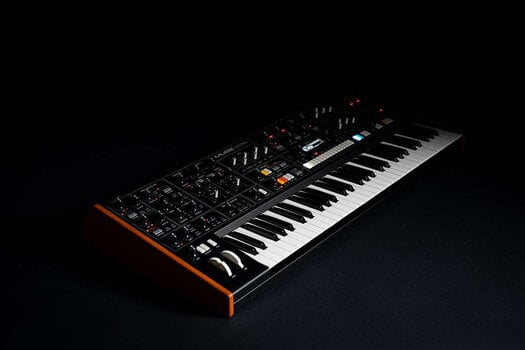
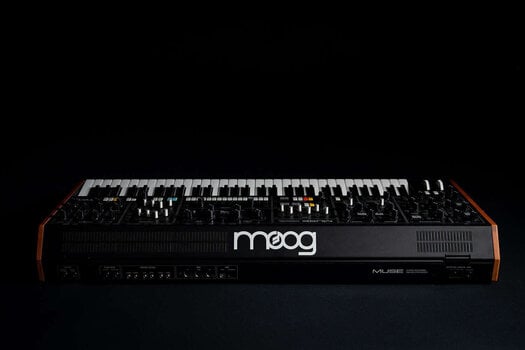
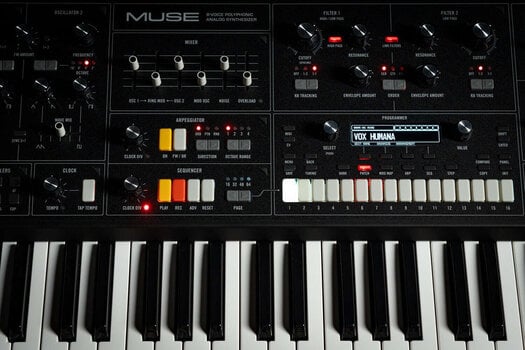
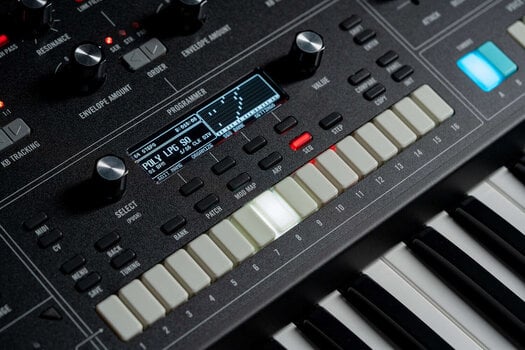
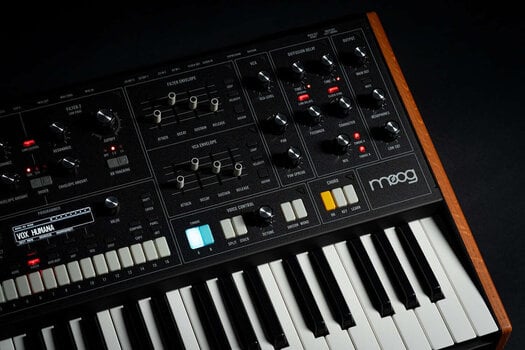
- Тype: Analog, Keyboard Synthesizer
- Sound Engine: Analog
- Number of Keys: 61
- Keyboard Type: Fatar with Aftertouch, Velocity sensitive
- Polyphony: 8
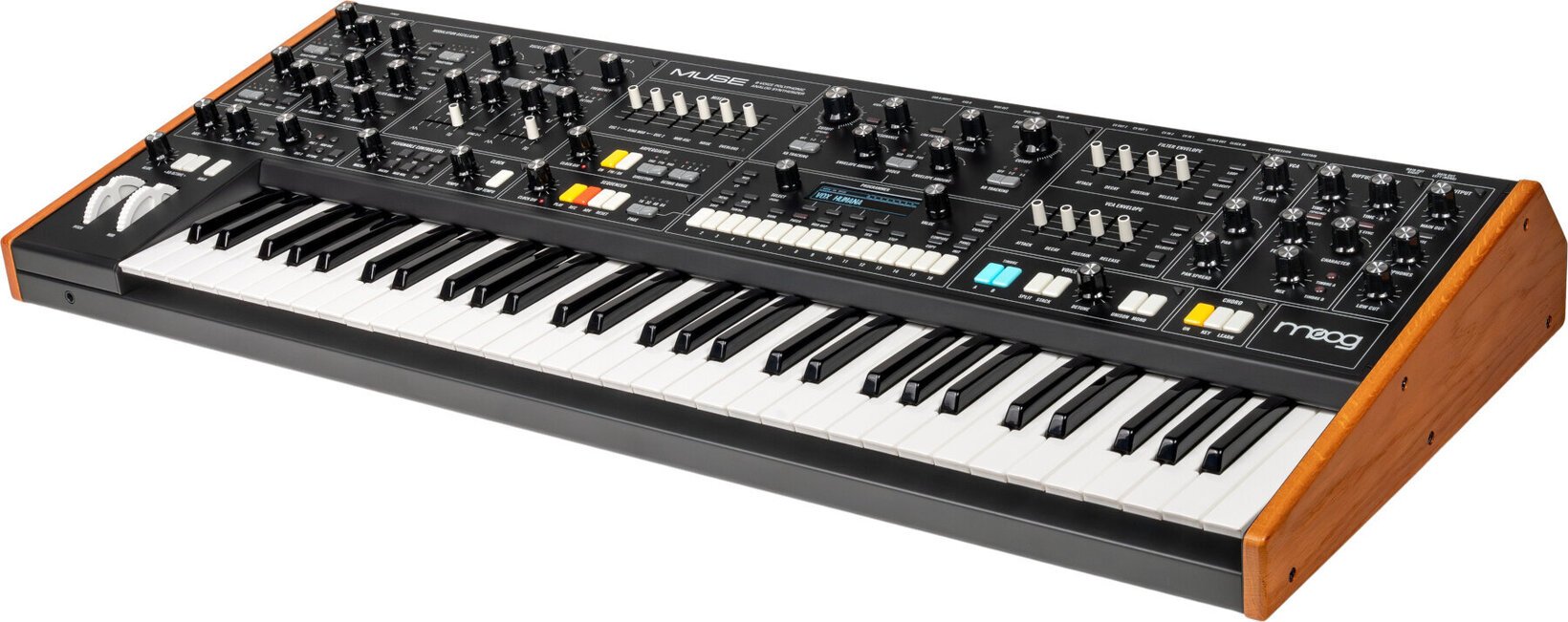
MOOG Muse Synthesizer
The MOOG Muse is an advanced 61-key analog polyphonic synthesizer built for bold sound design and expressive live performance. As a flagship eight-voice bi-timbral instrument, it merges classic analog warmth with powerful digital modulation and innovative sequencing tools.
- Fatar keybed with velocity and aftertouch empowers dynamic playability on stage or in the studio.
- Bi-timbral engine provides dual analog VCOs per voice, a versatile modulation matrix, and per-voice stereo VCA for wide sonic sculpting possibilities.
- Unique generative features, such as probability and coin toss, spark evolving, unpredictable patterns alongside a powerful arpeggiator and advanced sequencer.
- Moog ladder filters, analog ring modulator, and stereo Diffusion Delay bring lush, deep textures with both classic and contemporary sonic flavor.
MOOG Muse: Analog Powerhouse for Modern Creators
The MOOG Muse stands as a premier eight-voice analog polyphonic synthesizer, crafted for musicians and producers who demand both classic warmth and modern flexibility. A 61-key Fatar keyboard with aftertouch merges performance-focused controls with a comprehensive modulation architecture. With its bi-timbral engine, lush Moog ladder filters, and expansive modulation options, this instrument becomes a creative centerpiece for both studio and stage. The Muse is the flagship synth for sound designers wanting deep hands-on control and advanced generative features.
Bi-Timbral Architecture and Innovative Modulation
What sets the Muse apart is its bi-timbral analog architecture with a powerful digital modulation matrix. Each patch delivers two fully independent timbres, split or layered across the keys. Sound design is extended by the 16-slot modulation matrix per timbre, assignable controllers, and complex LFOs for intricate real-time manipulation and evolving sequences. Among its standout functions, the Diffusion Delay processor offers vintage-style delay, multi-tap rhythms, and immersive diffusion. Probability-driven sequencer options and the rare ‘coin toss’ feature add creative unpredictability to analog hardware.
Expressive Performance and Playability
Expressive playability defines the MOOG Muse experience. The Fatar keybed features 61 semi-weighted keys with velocity sensitivity and aftertouch for nuanced dynamics and real-time expression. Players benefit from hands-on modulation via pitch and mod wheels, an assignable Macro knob, and an OLED screen for fast patch navigation. The left-hand controller and programmable macro unlock instant access to deep morphing and modulation, while channel aftertouch fuels evolving pads and leads.
- With 61 keys, players can explore full-range performance and split/layer setups for complex arrangements.
- Keyboard Type: Fatar with Aftertouch, Velocity-Sensitive — delivers a highly responsive, premium playing feel.
- Aftertouch: Yes — enables real-time expressive control for dynamic live play.
Analog Sound Engine with Modern Flexibility
This model’s analog sound engine draws on classic Moog heritage, combining dual voltage-controlled oscillators (VCOs) per voice and a modulation oscillator for audio-rate and LFO tasks. Classic ladder filters (24dB/octave), a ring modulator, drive circuit, and stereo VCAs provide broad sonic possibilities. Bi-directional FM, oscillator sync, flexible filter routing, and analog mixer saturation create everything from lush pads to metallic textures and intense leads. The stereo Diffusion Delay adds dimensionality and vintage charm to every patch.
- Polyphony: 8 — explore rich chords or stack/layer complex timbres.
- Analog Engine: Dual VCOs per voice, Modulation Oscillator, Ladder Filters — delivers warmth and detail for every genre.
- Bi-Timbral Mode: Yes — split or stack two patches for creative flexibility.
Advanced Sequencing, Arpeggiation, and Generative Tools
Producers with a passion for creative sequencing find a 64-step sequencer with parameter automation, detailed micro-timing, and a chord memory system for different chords per key. The Muse’s arpeggiator includes step probability, programmable rests, and real-time pattern manipulation. Unique generative features like ‘coin toss’ enable probabilistic switching between sequences, bringing organic unpredictability for both live performance and studio experimentation.
- Sequencer: 64-step, polyphonic, parameter automation, probability functions
- Arpeggiator: Multiple modes, chord memory, programmable rests
- Exclusive generative tools inspire experimental composition and evolving textures.
Connectivity and Studio Integration
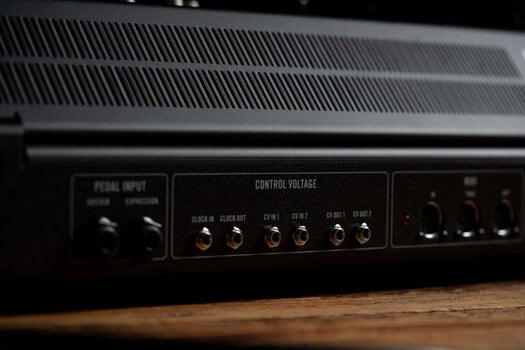
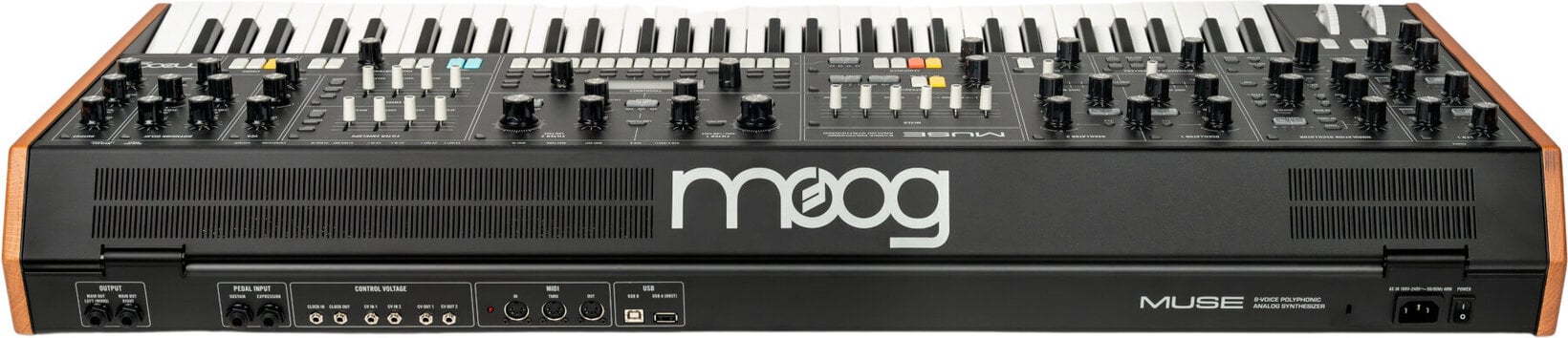
Multiple connectivity options allow seamless integration into any studio or stage rig. Muse features MIDI In/Out/Thru, USB MIDI (Type B), two expression pedal inputs, six Eurorack-style CV/clock I/O, and balanced main outputs with a dedicated headphone jack. Onboard OLED and disk mode support patch and sequence management, making it a reliable tool for complex projects and live sets.
- Connectivity: MIDI, USB, CV I/O, Expression Pedals, Balanced Outputs
- Store up to 256 patches and 256 sequences—ample space for creative exploration.
- Durable metal chassis and wooden end cheeks ensure road-ready resilience.
Who Is It For?
Professional synthesists, producers, and performers wanting the authentic Moog analog sound with advanced modulation and generative options discover inspiration in the MOOG Muse. For musicians who demand tactile performance control and sophisticated sequencing for evolving arrangements, it stands out as the right choice. Those creating in electronic music, cinematic sound design, or progressive genres take advantage of its blend of vintage tone, deep programmability, and workflow enhancements. With robust construction and dynamic expressivity, this instrument serves creators pushing analog synthesis forward.
Moog Muse and the Polyphonic Moog Legacy
Moog’s journey in polyphonic synthesis began with the legendary Apollo and Memorymoog. The Muse continues this legacy, drawing from Voyager circuits and modular DNA while introducing digital innovation. As a successor to previous Moog polyphonic flagships, it fuses decades of analog expertise with future-facing features, securing its place among the brand’s most significant synth milestones.


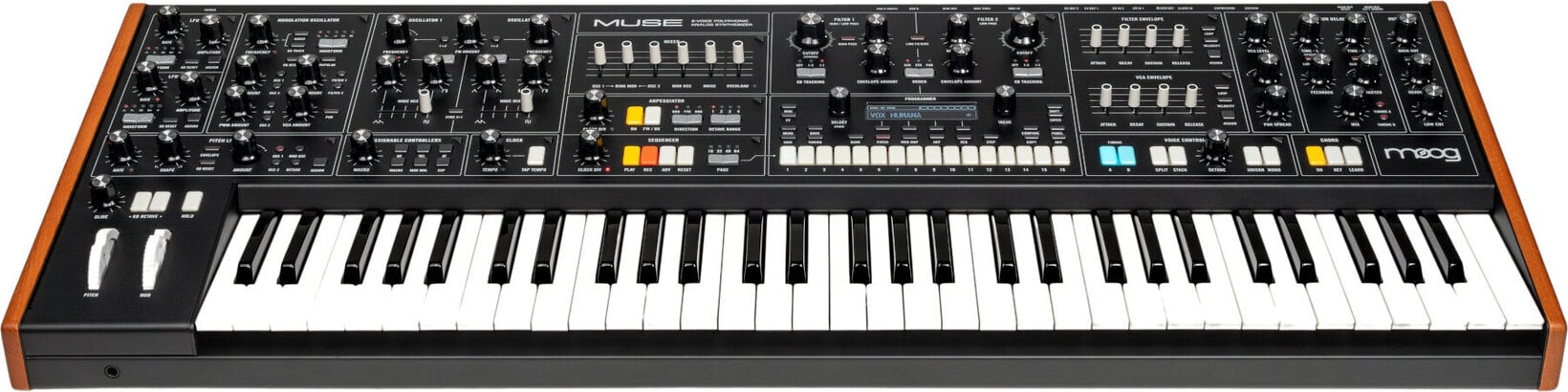
Number of Keys: 61
This instrument has 61 keys, equivalent to 5 octaves, providing a wide range of tones for a variety of musical applications.
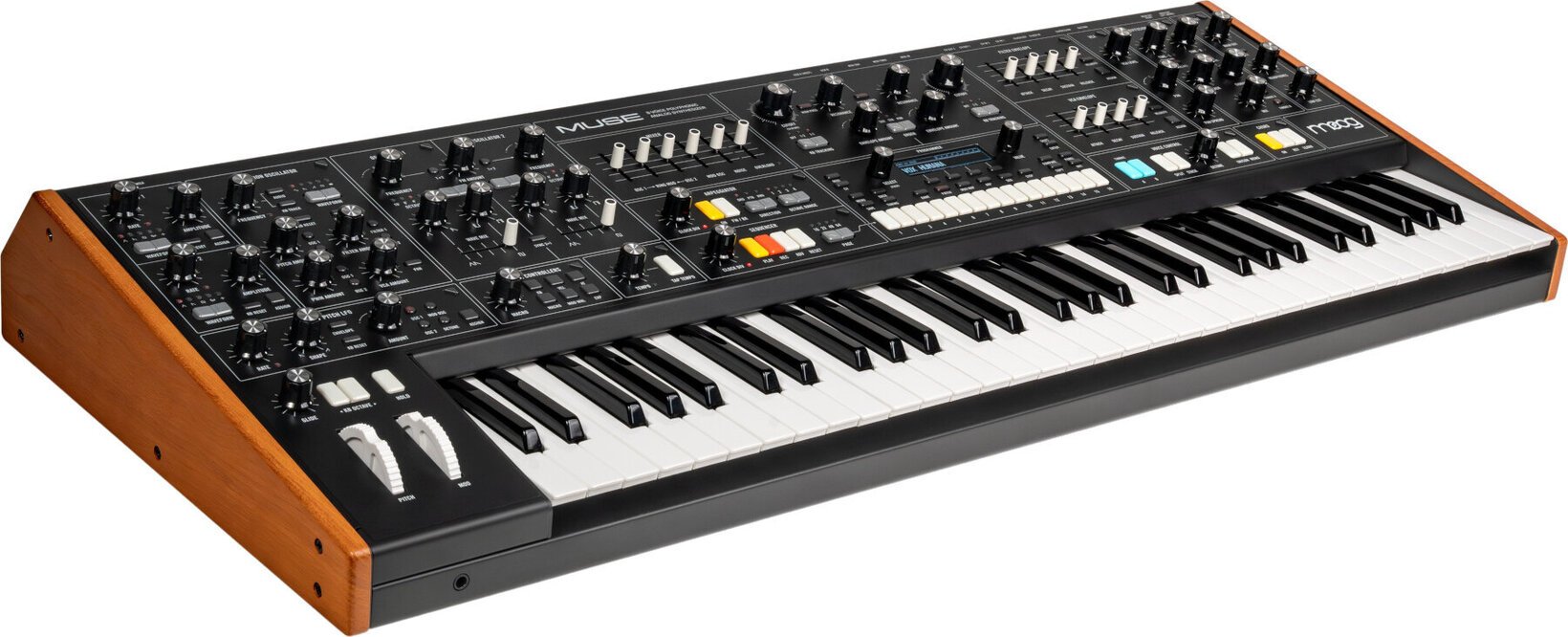
Keyboard Type
- Velocity sensitive
- Fatar with Aftertouch
Aftertouch: Yes
Aftertouch technology on the keys allows musicians to add a new level of expression to their playing. When a key reaches the bottom of its stroke, the pressure exerted on the key can continue to be sensed and used to control various aspects of the sound, such as vibrato, volume, or tone modulation.
Polyphony: 8
The polyphony of this instrument allows up to <%=tp_value % notes to be played simultaneously, providing rich and complex musical possibilities.
LFO: Yes
An LFO, or low frequency oscillator, brings electronic sound to life. It adds movement and interest to synthetic sounds and effects, playing an important role in both subtle synthesis and bold sound design. However, you won't hear the LFO itself because it acts as a modulator. This means that it does not directly affect the audio signal, but adjusts other parameters such as oscillator pitch and filter clipping.
Envelope: ADSR
The ADSR (Attack, Decay, Sustain, Release) type envelope filter gives you precise control over the dynamics and shape of your sound. The ADSR components are detailed as follows: Attack: Specifies how quickly the sound reaches its maximum volume upon activation. Decay: Specifies the time it takes for the volume to drop from maximum to sustain. Sustain: Represents a stable volume level that is maintained as long as the sound is active. Release: Specifies how quickly the volume fades to zero after the sound has been released.
Oscillators: 2
This dual-oscillator synthesizer offers a wide range of sonic possibilities that combine harmonic and non-harmonic tones. Users can adjust the frequency and amplitude of each oscillator separately, allowing harmonious layering of sounds, creating unison effects or captivating modulations.
Pitch Bend: Yes
The Pitch Bend allows smooth pitch changes, adding expressiveness to musical expression. Often used to create effects such as glissando or vibrato, this feature allows the player to make subtle or dramatic changes to the sound in real time. Pitch bend allows musicians to create smooth transitions between notes, increasing the dynamics and expressiveness of their performances.
Modulation: Yes
Modulation allows you to change different aspects of the sound in real time, opening up a wide range of creative possibilities. For example, it can affect the pitch of the sound, creating a vibrato effect, or it can change the amplitude of the signal, creating a tremolo effect. It can also adjust filtering to create smooth transitions between frequency bands and dynamic textures. Modulation can also be used to change the character of the sound depending on the time or intensity of playing, giving the sound a lively and moving character.
Sequencer: Yes
The sequencer provides musicians with a tool for composing and arranging music, allowing them to create and edit musical sequences. This feature allows you to record and play back repeating patterns. This makes it easy to create complex rhythms and melodies. The sequencer also allows you to layer different musical elements on top of each other, sync with other devices, and adjust parameters in real time. This flexibility makes the sequencer an invaluable tool for producing music, experimenting with new sounds and creating original compositions.
Arpeggiator: Yes
The Arpeggiator transforms chords into sequences of individual notes played in various rhythmic and melodic patterns. Instead of playing the chords as a harmonic whole, the Arpeggiator breaks the chords into individual notes and plays them sequentially according to the selected algorithm.
Headphone Output: Yes
The headphone output allows direct connection of headphones for private listening. This output provides a convenient way to enjoy the sound without disturbing others or ambient noise.
Inputs
- Clock
- MIDI IN
- Expression
- Sustain
Outputs
- Headphone Jack 3,5 mm TRS
- MIDI Thru
- Clock Out
- MIDI OUT
- Jack 6,3 mm
Pedal Inputs: Yes
The pedal input allows you to connect an external pedal that expands the instrument's control capabilities and contributes to a richer musical expression, increasing flexibility and expressiveness when playing and creating music.
MIDI Interface: Yes
It supports MIDI, allowing you to connect and communicate with other MIDI-compatible devices. This feature extends control and integration into the larger music environment, increasing flexibility and creativity in music creation.
Package Contents
- Manual
- Power Cable

Тype
Analog, Keyboard Synthesizer
Keyboard Technology
Fatar
Aftertouch
LFO
Envelope
ADSR
Oscillators
Modulation
Arpeggiator
Effect Types
MIDI Interface
Bluetooth
Built-in Speaker
Touch Sensitive
Sound Engine
Number of Keys
Keyboard Type
Fatar with Aftertouch, Velocity sensitive
Keyboard Finish
Smooth
Key Size
Full Size
Polyphony
Pitch Bend
Yes
Display
Colour
Headphone Output
Inputs
Pedal Inputs
Analogue Outputs
Microphone Input
USB
USB MIDI
USB to Device
USB to Host
Filter
Yes
Sequencer
Yes
Package Contents
UK/EU Power supply included
Width (cm)
99
Height (cm)
11
Depth (cm)
42
Net Weight (kg)
14.55
Made in
USA


Documents
Instructions for use
Manufacturer information
Safety instructions
Please refer to the user manual for the specific safety instructions for this product.

MOOG Muse Synthesizer


