 Albania
 Argentina
 Australia
 Austria
 Belgium
 Bosnia and Herzegovina
 Brazil
 Bulgaria
 Canada
 Chile
Chile
 Colombia
 Croatia
 Czech Republic
 Denmark
 Estonia
 Finland
 France
 Germany
 Greece
 Hungary
 Ireland
 Italy
Italy
 Latvia
 Lithuania
 Luxembourg
 Mexico
 Moldova
 Montenegro
 Netherlands
 New Zealand
 North Macedonia
 Norway
 Philippines
 Poland
 Portugal
 Romania
 Serbia
 Slovakia
 Slovenia
 South Africa
 Spain
Spain
 Sweden
 Switzerland
 Turkey
 Ukraine
 United Kingdom
 United States of America







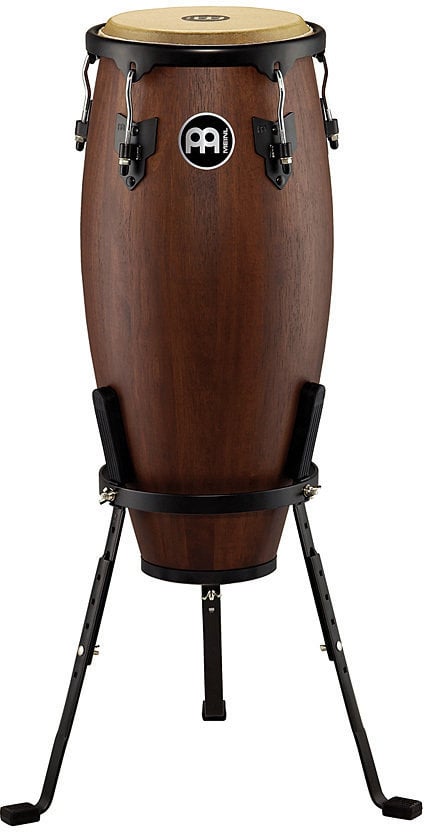
Conga series Headliner Designer, type NINO with a diameter of 10". The body is made of rubber wood, the head is made of goatskin. The surface is painted in the color Vintage Wine Barrel.
- Тype: Nino
- Material: Rubber Wood
- Diameter (inch): 10
Meinl HC10VWB-M Headliner Series Vintage Wine Barrel Conga
Conga series Headliner Designer, type NINO with a diameter of 10". The body is made of rubber wood, the head is made of goatskin. The surface is painted in the color Vintage Wine Barrel. It also includes a massive black metal tripod stand and a tuning key.
Congas are very characteristic, unique Cuban instruments. They are an integral part of the local music and culture. The roots of these instruments must be sought in the African cradle. From Africa, the homeland of many slaves who arrived on colonial ships, among others, to the island of Cuba, their culture and faith were brought along with the people, including memories of original musical instruments and rituals. In African culture, drums have always been among the most preferred. In Cuba, by mixing with European influences, especially Spanish, instruments and rhythms have developed separately from the original African originals for many years, and thus a typical Afro-Cuban culture. The conga in its current form is no longer found in Africa, it is a purely Cuban or Afro-Cuban instrument. Originally, similar drums were tuned using pins and wedges hammered into the bodies of the instruments. Today, the standardized membranes are tensioned using comfortable mechanics and keys. The conga can be heard all over Cuba, on the streets, in restaurants, at dance events and in courtyards, where people gather, play, sing and cannot imagine life without their music.
The local rhythms that we know today as - chachacha, son, rumba, mambo, bolero, salsa ... All of these are purely Cuban rhythms, but their African origin is still firmly rooted in them.
Congas are very characteristic, unique Cuban instruments. They are an integral part of the local music and culture. The roots of these instruments must be sought in the African cradle. From Africa, the homeland of many slaves who arrived on colonial ships, among others, to the island of Cuba, their culture and faith were brought along with the people, including memories of original musical instruments and rituals. In African culture, drums have always been among the most preferred. In Cuba, by mixing with European influences, especially Spanish, instruments and rhythms have developed separately from the original African originals for many years, and thus a typical Afro-Cuban culture. The conga in its current form is no longer found in Africa, it is a purely Cuban or Afro-Cuban instrument. Originally, similar drums were tuned using pins and wedges hammered into the bodies of the instruments. Today, the standardized membranes are tensioned using comfortable mechanics and keys. The conga can be heard all over Cuba, on the streets, in restaurants, at dance events and in courtyards, where people gather, play, sing and cannot imagine life without their music.
The local rhythms that we know today as - chachacha, son, rumba, mambo, bolero, salsa ... All of these are purely Cuban rhythms, but their African origin is still firmly rooted in them.

Material
Material
Package
Package Contents
Stand
Dimensions and Weight
Diameter
10"
Country
Made in
Thailand


Documents
Manufacturer information
Responsible person:
OLAND MEINL MUSIKINSTRUMENTE GMBH & CO. KG
Musik-Meinl-Str.1, 91468, Gutenstetten, Germany
Safety instructions
Please refer to the user manual for the specific safety instructions for this product.
Order today, we will deliver within 3 weeks
Based on your order, we will try to restock the goods and contact you with a delivery date.

£252