Albania
 Argentina
 Australia
 Austria
 Belgium
 Bosnia and Herzegovina
 Brazil
 Bulgaria
 Canada
 Chile
 Colombia
 Croatia
 Czech Republic
 Denmark
 Estonia
 Finland
 France
 Germany
 Greece
 Hungary
 Ireland
 Italy
 Latvia
 Lithuania
 Luxembourg
 Mexico
 Moldova
 Montenegro
 Netherlands
 New Zealand
 North Macedonia
 Norway
 Philippines
 Poland
 Portugal
 Romania
 Serbia
 Slovakia
 Slovenia
 South Africa
 Spain
 Sweden
 Switzerland
 Turkey
 Ukraine
 United Kingdom
 United States of America


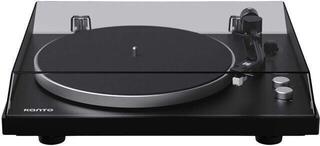
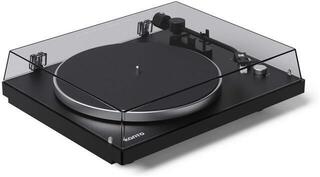
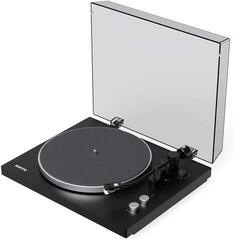
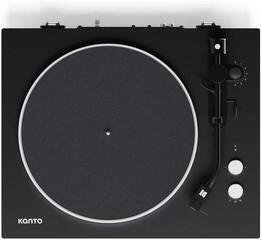
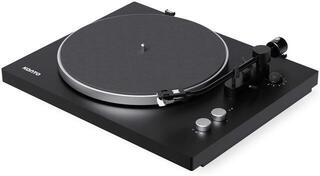
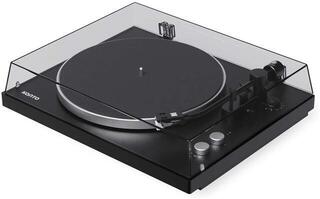
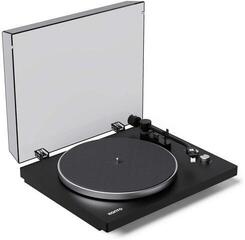
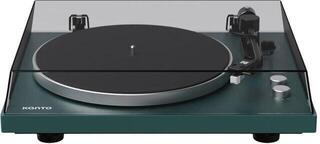
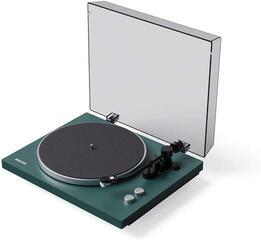
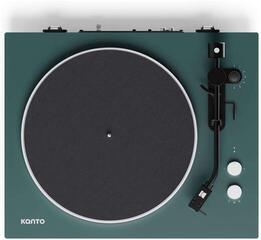
Hi-Fi Turntables
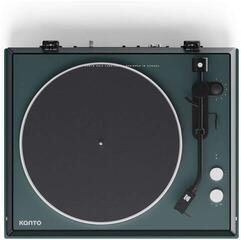
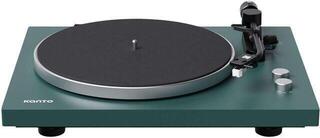
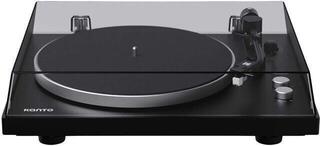
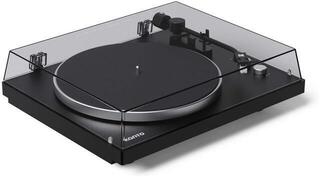
A Hi-Fi turntable lets you play vinyl records in an analogue way and adapt its operation to your own habits. When choosing one, it is important to distinguish between manual, semi-automatic and automatic operation, check the cartridge type and consider how it will connect to your system. You should also pay attention to stable placement, tonearm adjustment options and whether you need a separate phono preamplifier. The right choice therefore depends not only on appearance, but primarily on how you use it and the components you already have at home.
Hi-Fi turntables by type of operation
The basic difference between turntables is how many actions you perform manually. With a manual model, you place the tonearm at the beginning of the record and lift it again after playback. This gives you direct control over playback, but requires care when handling the cartridge and record.
A semi-automatic turntable handles part of the operation. The exact degree of automation differs between models, so always check the operating description. For example, the turntable may lift the tonearm or stop the platter at the end of a side, while starting playback remains up to you.
An automatic turntable can move the tonearm over the record after being started and return it to its resting position at the end of playback. It is practical if you want to limit manual handling or if several members of your household use the turntable. Automation does not change the analogue playback principle: the stylus still follows the record groove mechanically, and the cartridge converts its movement into an electrical signal.
| Type of operation | What you do manually | Nature of use | What to check |
|---|---|---|---|
| Manual | Lowering and lifting the tonearm | Direct control over the beginning and end of playback | Tonearm operation and adjustment options |
| Semi-automatic | Usually starting playback | A combination of manual operation and a selected automatic function | Which steps the model actually performs automatically |
| Automatic | Mainly placing the record and starting the mechanism | Fewer actions during normal listening | The start and stop process and options for manual intervention |
Cartridge, stylus and tonearm adjustment
The cartridge is the component that uses the stylus to pick up movement in the groove. A turntable may come with a factory-fitted cartridge or allow it to be replaced. Before buying, check what is included in the specific package and whether you can later replace just the stylus, the entire cartridge, or the cartridge together with its headshell.
When replacing it, considering only the type of mechanical mounting is not enough. The cartridge must suit the tonearm, the available adjustments and the input to which the turntable will be connected. Different cartridge designs may have different requirements for the phono preamplifier, so follow the documentation for both devices and do not assume that a physical connection automatically confirms compatibility.
If the turntable allows you to set the tracking force and anti-skating, follow the instructions from the turntable and cartridge manufacturers. Incorrect settings may affect groove tracking and wear on the record or stylus. With a model that has a fixed tonearm setup, you should not replace individual parts without checking that the design supports such a modification.
Turntable placement and record handling
Place the turntable on a firm, level and stable surface. Vibrations from the floor, furniture or speakers can reach the stylus, so do not place the turntable on the same unstable surface as vibrating equipment. If the location vibrates at higher volume, try changing the position of the components or how they are supported before looking for the cause in the cartridge.
Leave enough space around the turntable to open the cover, operate the tonearm and remove the record safely. Also consider the length of the interconnect and power cables, but do not route them so that they pull on the connectors or obstruct the cover. Protect the device from excessive moisture, dust, sudden temperature changes and direct sunlight.
Hold a record by its edges and centre label to avoid unnecessarily contaminating the grooves. Before playback, remove loose dust with a suitable tool, and after listening, store the record vertically in its sleeve. Clean the stylus only in the manner recommended by its manufacturer; move in the correct direction when handling it and do not press on the delicate suspension.
Connecting to a Hi-Fi system
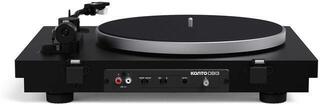
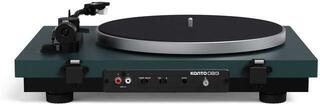
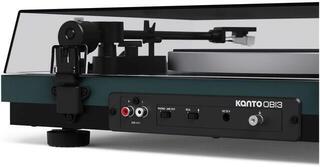
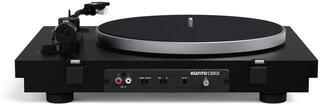
The signal from the cartridge must be processed by a phono preamplifier. This may be built directly into the turntable, included in a suitable amplifier, or provided as a separate device. Accordingly, you connect the turntable to the appropriate phono input or use the line output from the built-in or external preamplifier.
Do not connect a turntable to a regular line input without its phono preamplifier enabled and expect the same signal processing. At the same time, avoid processing the signal through two phono preamplifiers in succession. If the model has a switch between phono and line output, set it according to the input type on the next device.
Some systems also require a grounding wire between the turntable and the preamplifier or amplifier. Use it when the devices have a dedicated grounding terminal and the connection requires it. Consult the manual for the exact procedure, as connector and switch layouts are not the same on every model.
If you are building a broader home setup, you can continue to the Hi-Fi amplifiers and preamplifiers category. To view other related components, go to Hi-Fi systems. Before ordering, compare the available inputs, outputs and volume control method across the entire signal path.
What to check before choosing
- Decide whether you want manual, semi-automatic or automatic operation.
- Check which actions the model performs automatically and which remain up to you.
- Find out whether the package includes a cartridge and stylus and what replacement options the manufacturer specifies.
- Check the available tonearm adjustments, especially if you plan to change the cartridge.
- Check whether the turntable includes a preamplifier or needs a suitable external one or one built into an amplifier.
- Compare the turntable output with the inputs on your existing system.
- Find out whether the connection uses a separate grounding wire.
- Choose a stable, level location with room for the cover, cables and record handling.
- Plan where to route the signal and power cables without placing strain on the connectors.
- Check the manufacturer's instructions for initial setup, automatic operation and stylus maintenance.
Manual control or automatic convenience
Choosing between a manual and automatic turntable is mainly a question of how you listen. If you want to perform every step yourself and do not mind staying by the player at the beginning and end of each side, focus on manual models. If you want to reduce the risk of the tonearm remaining at the end of the record after playback, consider a semi-automatic or automatic solution according to the functions specified.
When comparing models, do not assess automation separately from the rest of the design. The available cartridge, tonearm adjustment, output type and downstream components are all important. This allows you to retain analogue playback while choosing a level of automation that suits your everyday use.