 Albania
 Argentina
 Australia
 Austria
 Belgium
 Bosnia and Herzegovina
 Brazil
 Bulgaria
 Canada
 Chile
Chile
 Colombia
 Croatia
 Czech Republic
 Denmark
 Estonia
 Finland
 France
 Germany
 Greece
 Hungary
 Ireland
 Italy
Italy
 Latvia
 Lithuania
 Luxembourg
 Mexico
 Moldova
 Montenegro
 Netherlands
 New Zealand
 North Macedonia
 Norway
 Philippines
 Poland
 Portugal
 Romania
 Serbia
 Slovakia
 Slovenia
 South Africa
 Spain
Spain
 Sweden
 Switzerland
 Turkey
 Ukraine
 United Kingdom
 United States of America







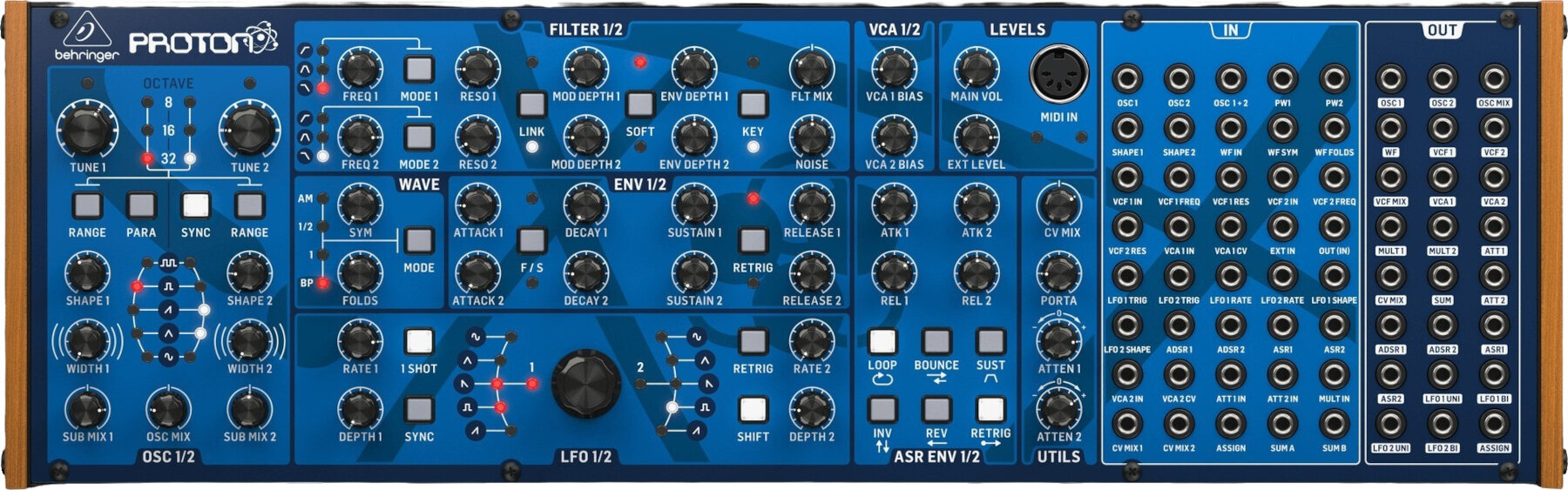
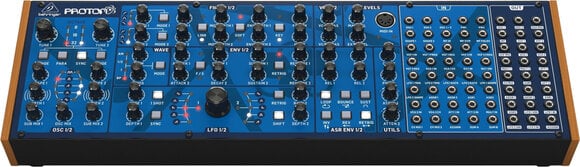
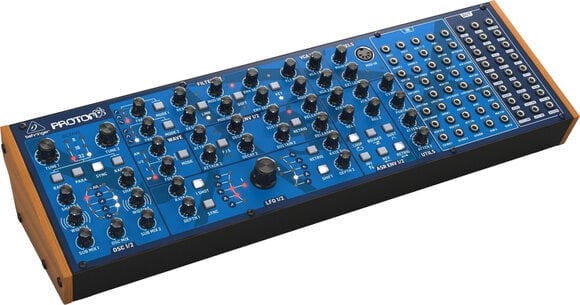
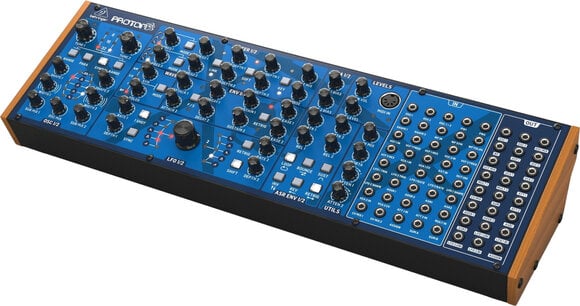
Behringer Proton Synthesizer
The Behringer Proton is an analog paraphonic semi-modular synthesizer built around dual VCOs, dual multi-mode VCFs, and a comprehensive patch bay, ready to anchor any Eurorack or desktop rig.
- Two analog VCOs with five switchable waveforms each plus dedicated sub-oscillators cover everything from punchy leads to deep basses.
- Four total envelopes — two ASR with reverse/loop/bounce and two ADSR — plus two LFOs with MIDI clock sync shape every contour.
- A multi-mode wave folder adds rich harmonic content, while the onboard noise generator opens textural territory.
- Eurorack-ready 80 HP chassis with 5-pin DIN MIDI, USB MIDI, and 6.3 mm main outputs integrates into any studio or modular setup.
Behringer Proton — Analog Paraphonic Semi-Modular Synthesizer
The Behringer Proton is a paraphonic semi-modular analog synthesizer designed to anchor a Eurorack system or stand alone as a complete desktop voice. Two analog VCOs, dual multi-mode filters, and a deep patch bay give it the scope of a modular system without forcing the player to commit to cable-heavy patching from the first note. Connect a MIDI keyboard via DIN or USB and the instrument runs straight out of the box. Built around an intuitively linear workflow, this model pairs the immediacy of a preset-style synth with the creative reach of a semi-modular architecture. Paraphonic voicing lets two oscillators play independent pitches, opening the door to harmonized lines that a strict monosynth cannot reach.
What sets this paraphonic synth apart
The Proton ships with a multi-mode wave folder offering AM, half-wave, and full-wave folding modes plus a symmetry control — a feature uncommon at this price tier that pushes simple waveforms into dense, metallic territory. Each ASR envelope includes reverse, inverse, loop, and bounce modes, turning a standard modulation source into a tool for evolving textures.
Oscillators and sound source — the heart of the analog engine
Sound generation begins with two analog voltage-controlled oscillators, each offering five switchable waveforms plus a dedicated sub-oscillator. Oscillator sync and pulse-width modulation are available from the front panel, so the Proton covers everything from thick basses to cutting leads.
- Oscillators: 2 analog VCOs — independent pitch and waveform control per voice
- Waveforms: tone mod, pulse, sawtooth, triangle, sine — five switchable shapes per oscillator
- Sub-oscillator: one per VCO — adds weight and girth to bass patches
- Noise generator — onboard source for percussion, hats, and evolving texture layers
Filters, envelopes, and modulation — sculpting the signal
Two self-oscillating multi-mode voltage-controlled filters run in parallel and can be patched into series, giving the player both broad stereo-style timbres and aggressive single-filter drive. The envelope and LFO complement covers nearly every modulation need.
- Filters: 2 multi-mode VCFs, 12 dB/octave — highpass, bandpass, lowpass with full resonance
- ASR envelopes: 2 with reverse/inverse/loop/bounce — flexible looping modulation sources
- ADSR envelopes: 2 analog generators — classic shaping for VCF and VCA
- LFOs: 2 with 5 waveforms, MIDI clock sync — phase, depth, key, and sync controls
Connectivity, format, and physical design — Eurorack-ready integration
The Proton fits a standard Eurorack case at 80 HP and ships with a 12 VDC external PSU. Its I/O covers every common studio connection plus a deep 3.5 mm patch bay for modular expansion.
- Format: Eurorack, 80 HP — drops into any standard rack case
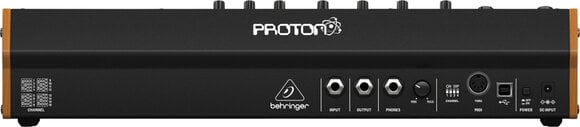
- MIDI: 5-pin DIN In/Out (Soft Thru) + USB MIDI — controller and DAW integration
- Main outputs: 6.3 mm jack (1/4" TS) — line-level signal to mixer or audio interface
- Headphone output: 6.3 mm TRS — private monitoring without an amp
- Patch bay: 3.5 mm I/O — extensive CV/gate routing for modular expansion
- Built-in speaker: no — headphones or external monitoring required
- Dimensions: 94 x 424 x 136 mm — desktop-friendly footprint
Who is the Behringer Proton for
The Behringer Proton is the right choice for synth players who want a true analog voice with semi-modular depth at a price that does not require a second mortgage. It suits producers building a first modular system, sound designers chasing paraphonic textures, and live performers needing a compact, MIDI-controllable analog brain on stage. Users coming from the Neutron will recognize the workflow but gain paraphonic voicing, a wave folder, and a more flexible envelope section. Anyone with an existing Eurorack rack can drop the unit in as a complete voice module.
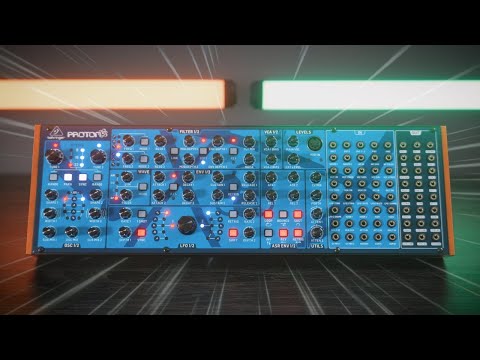
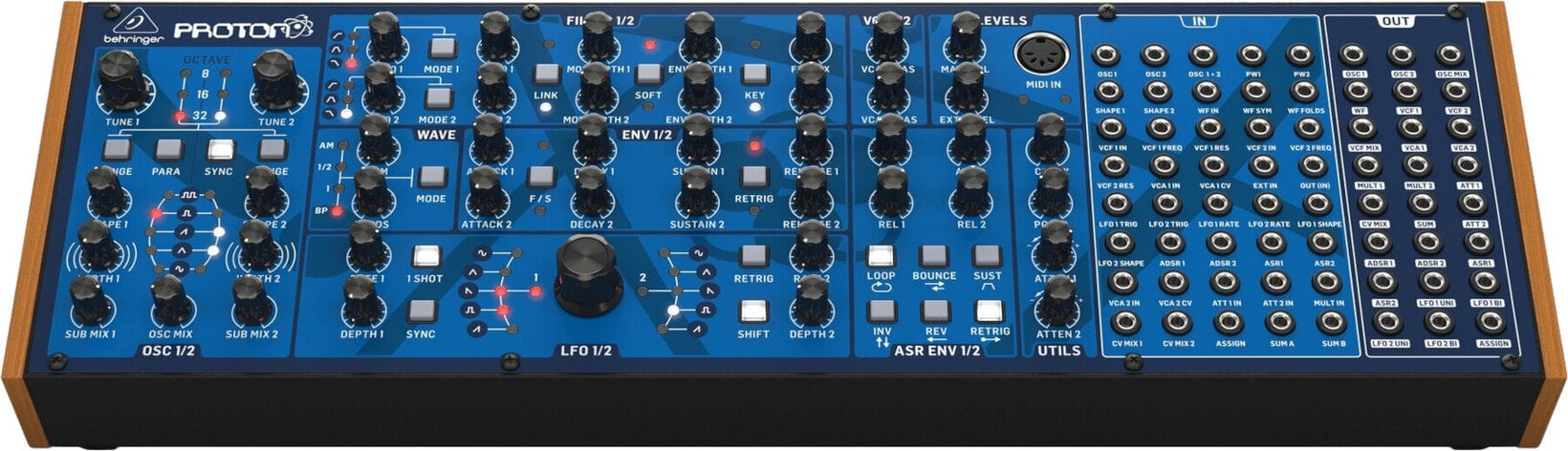
LFO: Yes
An LFO, or low frequency oscillator, brings electronic sound to life. It adds movement and interest to synthetic sounds and effects, playing an important role in both subtle synthesis and bold sound design. However, you won't hear the LFO itself because it acts as a modulator. This means that it does not directly affect the audio signal, but adjusts other parameters such as oscillator pitch and filter clipping.
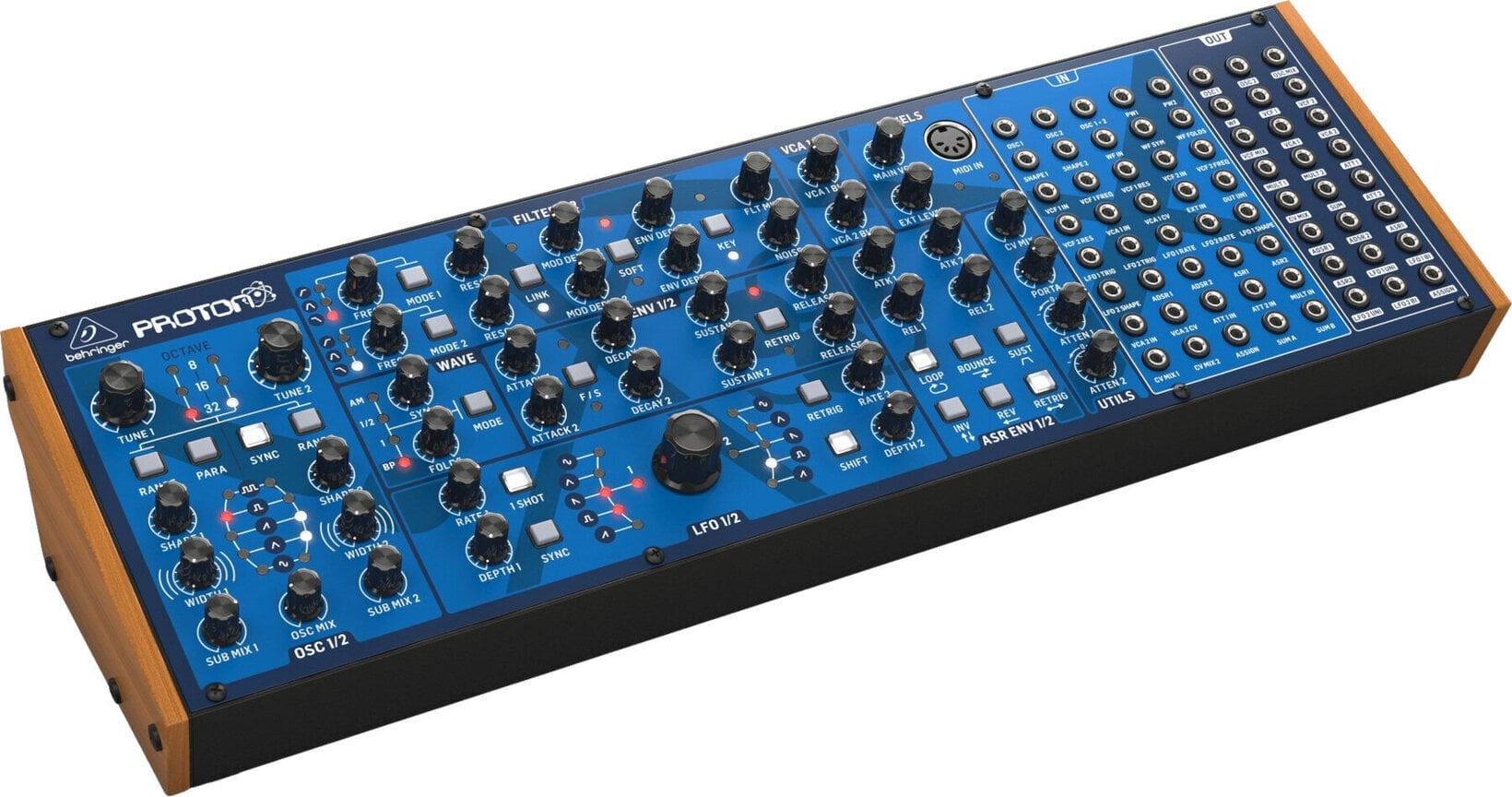
Envelope
- ADSR
- Yes
- ASR
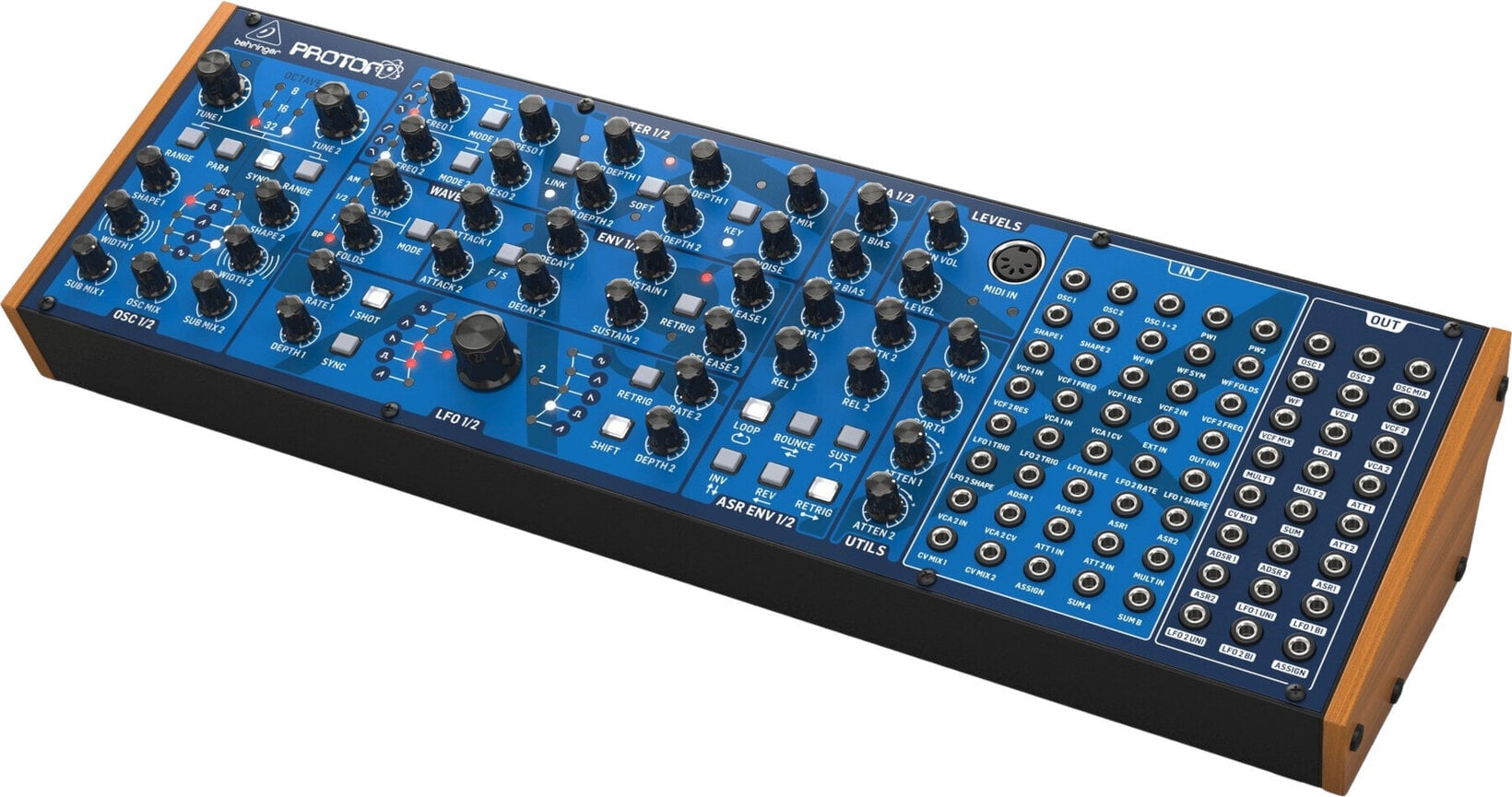
Headphone Output: Yes
The headphone output allows direct connection of headphones for private listening. This output provides a convenient way to enjoy the sound without disturbing others or ambient noise.
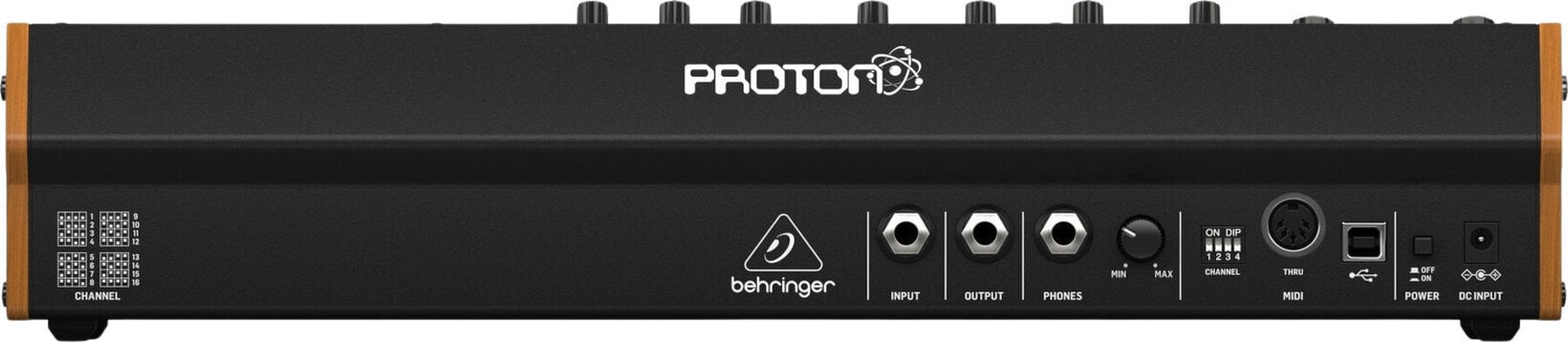
Inputs: Jack 6,3 mm
A universal connector used to connect various audio devices.
MIDI Interface: Yes
It supports MIDI, allowing you to connect and communicate with other MIDI-compatible devices. This feature extends control and integration into the larger music environment, increasing flexibility and creativity in music creation.

Тype
Desktop Synthesizer, Semi-modular
LFO
Envelope
Yes (4 ), ADSR (2 ), ASR (2 )
Oscillators
MIDI Interface
Built-in Speaker
Headphone Output
Inputs
Outputs
Analogue Outputs
USB
USB MIDI
Filter
Yes (2 )
Power Supply
100V - 240V
Width (cm)
42.4
Height (cm)
9.4
Depth (cm)
13.6
Weight
2 kg


Documents
Instructions for use
Manufacturer information
Safety instructions
Please refer to the user manual for the specific safety instructions for this product.


