Albania
 Argentina
 Australia
 Austria
 Belgium
 Bosnia and Herzegovina
 Brazil
 Bulgaria
 Canada
 Chile
 Colombia
 Croatia
 Czech Republic
 Denmark
 Estonia
 Finland
 France
 Germany
 Greece
 Hungary
 Ireland
 Italy
 Latvia
 Lithuania
 Luxembourg
 Mexico
 Moldova
 Montenegro
 Netherlands
 New Zealand
 North Macedonia
 Norway
 Philippines
 Poland
 Portugal
 Romania
 Serbia
 Slovakia
 Slovenia
 South Africa
 Spain
 Sweden
 Switzerland
 Turkey
 Ukraine
 United Kingdom
 United States of America


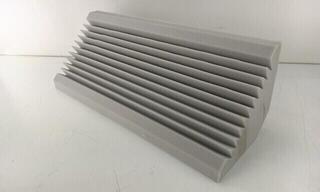
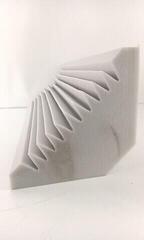
Bass Traps
Bass traps are acoustic elements intended to damp problems at low frequencies. In a recording, home or rehearsal space, they help shorten bass decay and reduce resonances that make it harder to assess a recording or performance. They are most often placed in corners or at wall junctions, but the correct position depends on room dimensions and measurement results. Choose them together with other room treatment, not as decoration or an automatic replacement for every acoustic panel.
When bass sounds different in every corner
Low frequencies have long decay in a room and create pronounced differences between hard surfaces. In one position bass may seem excessive, while a step farther away it may be missing. When mixing, you can then easily cut or boost bass because of a room error rather than the recording. Treatment should reduce these differences so conditions do not change from one listening session to the next.
A bass trap does not act like an electronic filter in the signal path. It works with sound energy in the room, and its effect depends on material, thickness, construction, placement and the range for which it was designed. A thin panel intended mainly for mid and high frequencies therefore cannot automatically be considered full low-frequency treatment.
Comparison of acoustic elements
| Element | Main role | Typical placement |
|---|---|---|
| Bass trap | Damping selected low-frequency problems and their decay | Corners and surface junctions, or positions determined by measurement |
| Broadband absorption panel | Reducing reflections across a broader part of the spectrum, depending on construction | First reflection points, walls or ceiling |
| Diffuser | Scattering reflected energy rather than directly absorbing it | A position chosen according to distance and room design |
| Curtain or soft furnishings | Mainly partial damping of higher frequencies | According to practical need, not as a bass-trap replacement |
You can find further absorption solutions among studio acoustic treatment. If you want to retain more energy in the room and work with reflections, also see diffusers. Combine them according to the identified problem, not according to the number of empty walls.
Adjust placement first, then measure
Start with sensible placement of monitors and the listening position. Moving the desk or speakers can change which frequencies are boosted or reduced where you sit. Then listen to familiar recordings in several places and, if you have suitable equipment, measure frequency response and decay. A single curve without time data may not reveal the whole problem.
- Record room dimensions and the materials of the main surfaces.
- Compare listening at the work position, in corners and by the rear wall.
- Look for recurring boominess or tones that decay noticeably long.
- After every major change, repeat the same measurement and listening.
- Do not change monitor position, furniture and all panels at once; you will not know what helped.
Passive and tuned designs
Porous traps
Porous materials convert part of the acoustic energy into heat as air moves through their structure. At low frequencies, sufficient depth and placement with an air gap or in a corner are often important. The specific effect cannot be determined from appearance or material name alone; consider the manufacturer's data and the whole construction, including covering and frame.
Resonant and tuned solutions
A tuned trap targets a narrower range and can be appropriate for a clearly identified problem. It requires more precise design and placement. If you do not have measurements or an acoustic plan, a more universal broadband solution is usually easier to integrate, but even with it no result can be promised without knowledge of the room.
Placement in a studio
Corners are often addressed because several surfaces meet there and space is usually available for a thicker element. However, it is not a rule that occupying one arbitrary corner is enough. With symmetrical monitoring, try to retain similar conditions on the left and right sides. Check doors, ventilation, sockets and safe cable access as well.
Mount traps according to the instructions and their weight. A tall element leaning freely can fall, while an incorrectly hung panel can damage the wall or ceiling. Material must not block radiators, lights or equipment ventilation. In a rented space, choose in advance a mounting method you can implement safely.
Home recording, mixing and rehearsal room
For mixing, the goal is more reliable monitoring at the main working position. When recording, you may also address bleed, early reflections and the character of the space around the microphone. Bass traps help with low frequencies, but they do not remove outside noise or provide sound insulation between rooms. If you are setting up a recording corner, also see studio microphones, while choosing the microphone only according to the source and environment.
In a rehearsal room, it is necessary to distinguish between acoustic treatment and reducing sound transmission to neighbours. Absorptive elements alter reflections inside; building insulation addresses transmission through walls, ceiling, floor, doors and ventilation. Confusing these goals leads to a purchase that will not solve the main problem.
Selection checklist
- Identify the frequency and time-related problem through listening and, where possible, measurement.
- Measure the available corner or surface, including obstacles.
- Compare construction, depth, mounting method and absorption data.
- Decide whether you need broader action or a specifically tuned element.
- Plan symmetry around the listening position and the combination with panels or diffusion.
- After installation, repeat the original test under the same conditions.
The room does not need to be completely deadened. You need to bring problematic decay and reflections under control so that while working you hear changes in the recording, rather than a different room error each time.