 Albania
 Argentina
 Australia
 Austria
 Belgium
 Bosnia and Herzegovina
 Brazil
 Bulgaria
 Canada
 Chile
Chile
 Colombia
 Croatia
 Czech Republic
 Denmark
 Estonia
 Finland
 France
 Germany
 Greece
 Hungary
 Ireland
 Italy
Italy
 Latvia
 Lithuania
 Luxembourg
 Mexico
 Moldova
 Montenegro
 Netherlands
 New Zealand
 North Macedonia
 Norway
 Philippines
 Poland
 Portugal
 Romania
 Serbia
 Slovakia
 Slovenia
 South Africa
 Spain
Spain
 Sweden
 Switzerland
 Turkey
 Ukraine
 United Kingdom
 United States of America







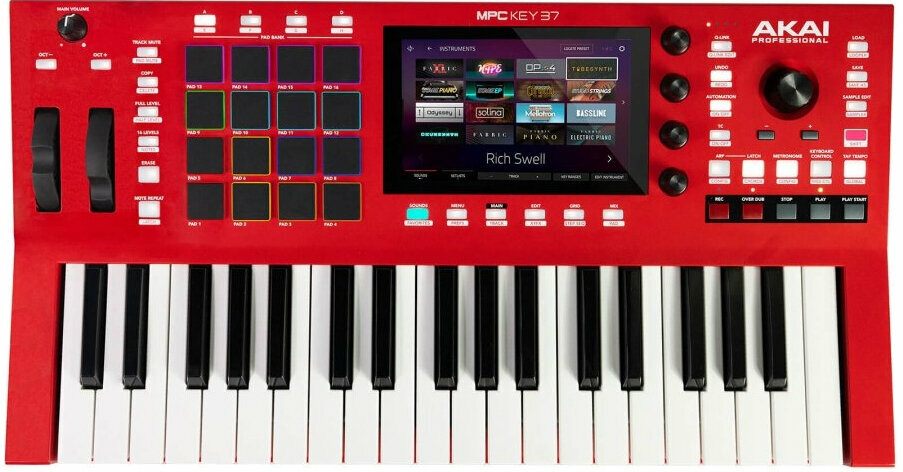
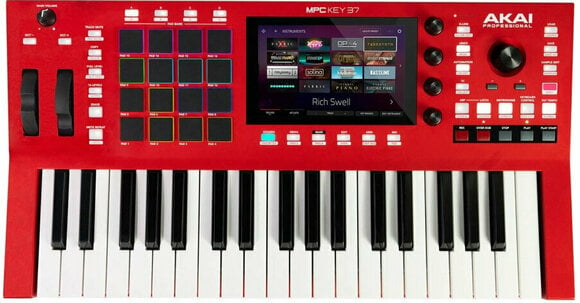
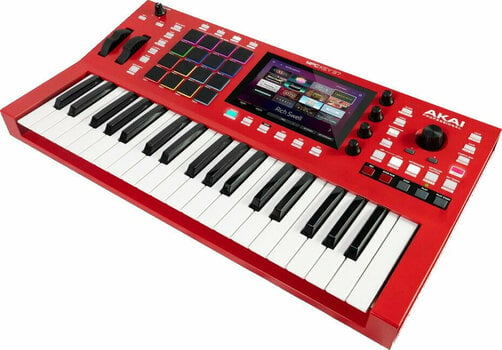
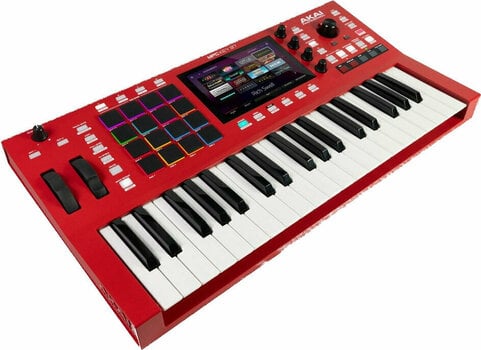
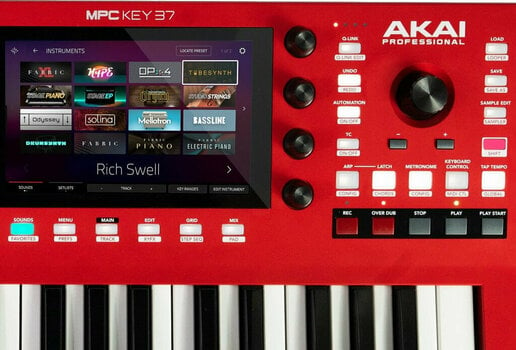
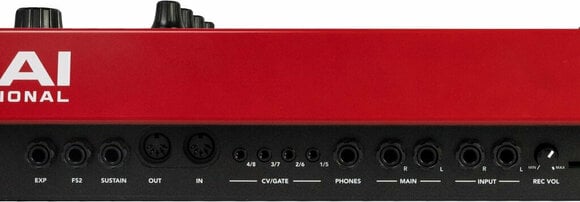
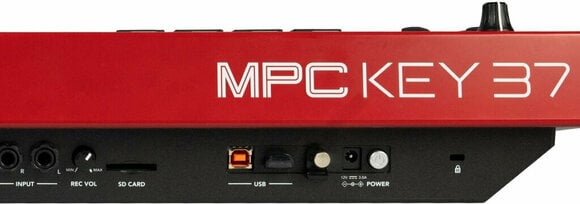
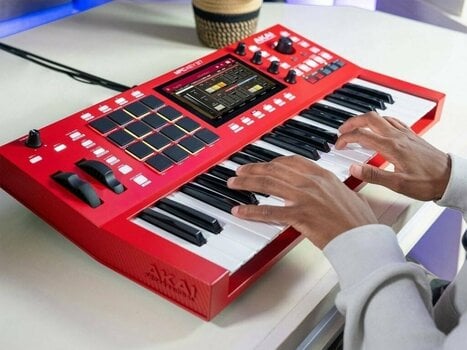
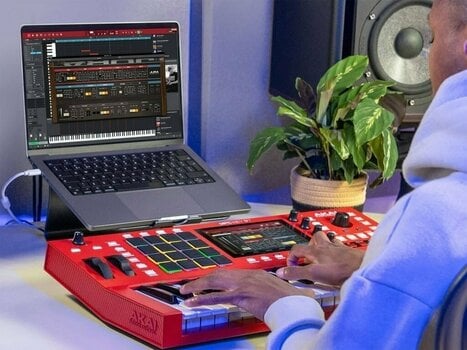
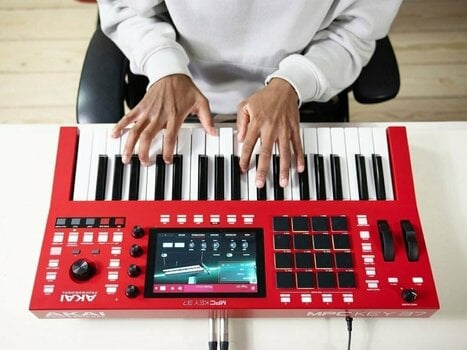
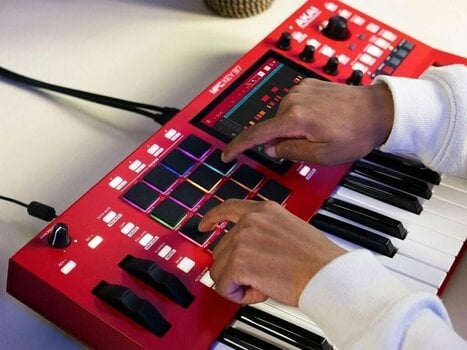

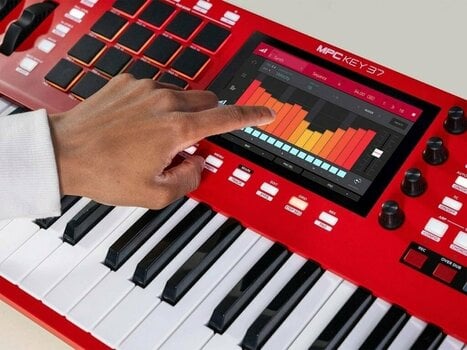
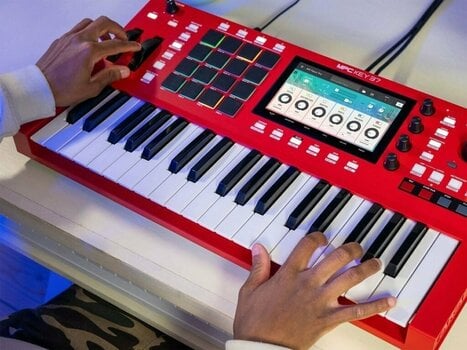

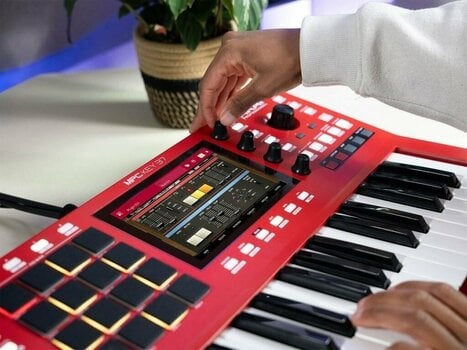
- Тype: Desktop Synthesizer
- Number of Keys: 37
- Keyboard Type: Synth Action
- Polyphony: Yes
Akai MPC KEY 37 Synthesizer
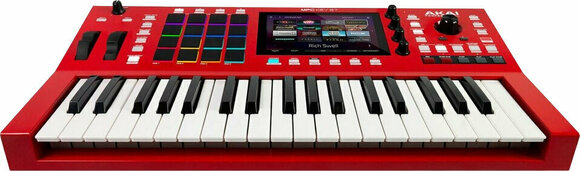
The Akai MPC KEY 37 is a standalone production keyboard that fuses a 37-key synth-action keybed, 16 velocity-sensitive MPC pads, and the full MPC3 OS into one instrument. It lets producers play chords, build beats, sample audio, and arrange full songs without touching a computer. With aftertouch, pitch and mod wheels, and a 7-inch touchscreen, it bridges keyboard performance and classic MPC beat-making in a single, lightweight unit.
- 37 synth-action keys with aftertouch for expressive lead, pad, and bass performance
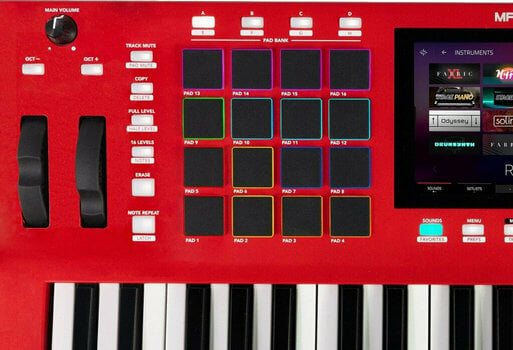
- 16 velocity- and pressure-sensitive RGB pads for finger drumming and clip launching
- Standalone workflow with up to 16 stereo audio tracks and 32 plugin instruments per project
- 7-inch multi-touch capacitive display with dedicated Q-Link encoders and 38 function buttons
- USB-C connectivity delivering 24-track multichannel audio plus expanded MIDI over one cable
- Wi-Fi and Bluetooth 5 for wireless content downloads, updates, and Ableton Link
- Includes over 20 GB of factory content, NI MPC Editions, Spitfire Audio, and two months of Splice
Akai MPC KEY 37 — Standalone Production Keyboard with Keys, Pads, and Sampling
The Akai MPC KEY 37 is a next-generation standalone MPC keyboard synthesizer that brings melody, harmony, rhythm, and sampling into a single instrument. Designed for producers who want to create, arrange, and finish full tracks without opening a computer, it pairs a 37-key synth-action keybed with the legendary MPC pad layout. The Akai MPC KEY 37 is the right choice for beat-makers and keyboard players who need a self-contained production hub that travels easily between studio, stage, and home setups.
Keys and Pads Working as One Instrument
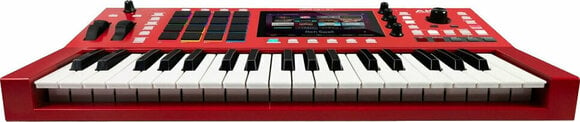
What makes this model stand out in the standalone workstation category is the physical integration of a 37-key semi-weighted keybed with aftertouch alongside 16 velocity- and pressure-sensitive RGB-backlit pads. Pitch and modulation wheels sit next to octave-shift, arpeggiator, chord-mode, and split/layer buttons, so melodic playing and rhythmic triggering happen on the same surface without extra cables. The retro cream colorway echoes the iconic late-1980s MPC aesthetic while keeping a modern, performance-focused layout.
Keyboard and Performance Controls — Playability for Producers
The keybed is the heart of any keyboard-focused workstation, and the synth-action keys here are tuned for both rhythmic playing and expressive lead work. Monophonic aftertouch adds a roughly 2 mm of usable pressure travel on the white keys, letting players modulate synth leads, pads, and FX in real time without reaching for a separate controller.
- Keys: 37 synth-action keys with monophonic aftertouch — direct, controlled feel suited to chords, bass, and lead lines
- Wheels: Pitch bend and modulation — standard expressive control for synth and sampler parts
- Pads: 16 velocity- and pressure-sensitive RGB-backlit pads across 8 banks — MPC-style finger drumming and sample chopping
Processing Power and Standalone Engine — Speed for Larger Sessions
Inside the housing, the G2 generation runs on an eight-core ARM processor with 4 GB of RAM and 64 GB of internal storage, giving it roughly four times the performance of the previous generation. That headroom translates into faster plugin loading, smoother preset browsing, and the ability to keep multiple instrument tracks running in parallel without dropouts.
- CPU: Eight-core ARM processor — handles layered arrangements and complex standalone sessions
- RAM: 4 GB — enough headroom for sample-based instruments and multi-track projects
- Storage: 64 GB internal plus SD card and USB expansion for sound libraries and projects
Audio, Connectivity, and Included Software — Studio-Ready I/O
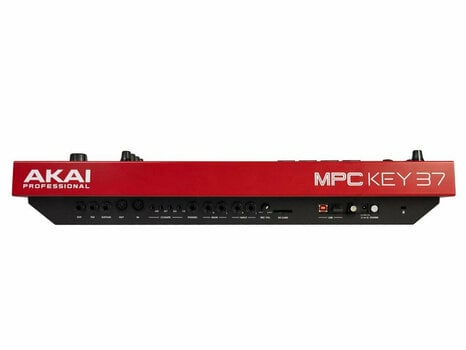
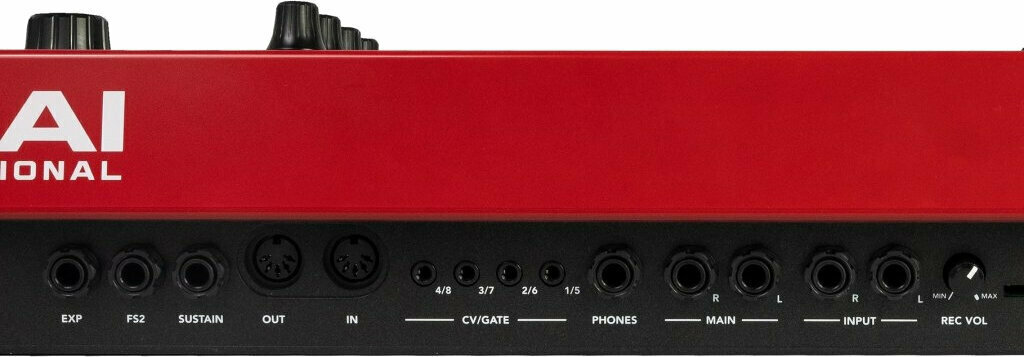
Audio quality and I/O matter when a workstation has to replace an entire computer-based rig. The MPC KEY 37 ships with 24-bit ADCs and DACs running 32-bit floating-point DSP, balanced 1/4-inch TRS line inputs and outputs, and a stereo headphone jack. USB-C carries up to 24-track multichannel audio plus expanded MIDI, while classic 5-pin DIN MIDI, four CV/Gate jacks, and sustain/footswitch/expression pedal inputs cover modular and hybrid rigs.
- Audio System: 24-bit ADCs/DACs with 32-bit floating-point DSP — clean capture and playback for sampling and mixdown
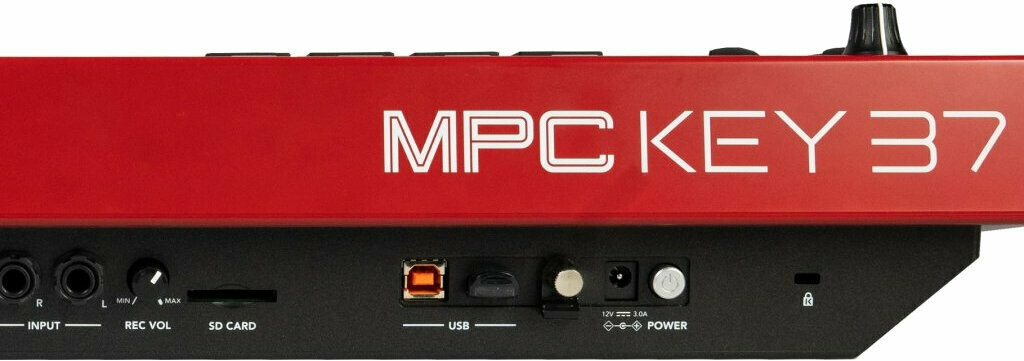
- Connectivity: USB-C, USB-A, 5-pin MIDI In/Out, 4 CV/Gate jacks, 3 pedal inputs — bridges DAW, modular, and stage setups
- Wireless: Wi-Fi 2.4/5 GHz and Bluetooth 5 — wireless firmware updates, content downloads, and Ableton Link
- Included Software: MPC3 OS, over 20 GB of factory content, NI MPC Editions, Spitfire Audio, and two months of Splice
Who Is It For — Producers, Performers, and Songwriters
The Akai MPC KEY 37 is the right choice for producers and performers who want a single piece of gear to handle sampling, sequencing, sound design, and keyboard parts without a computer in the loop. It suits beat-makers who already pair a keyboard with an MPC and want to consolidate that setup, as well as songwriters who need a portable rig for studios, venues, and collaborations. The 7-inch multi-touch touchscreen, dedicated Q-Link encoders, and 38 backlit function buttons keep hands-on control immediate, while Wi-Fi and Bluetooth 5 let users grab new sounds and firmware updates on the fly. For hybrid workflows, Ableton project import and export plus MPC3 software integration make it easy to move ideas between standalone sessions and a DAW.
The Akai MPC Legacy — From the 1980s to Today
Akai's MPC line traces back to the late 1980s, when the original MPC60 redefined sampling and sequencing for hip-hop and electronic music production. The MPC KEY 37 continues that lineage by combining the cream-colored visual identity of those early machines with a modern, performance-focused layout. The cream colorway on this generation is a deliberate nod to the iconic MPCs of that era, blending classic design with today's standalone production engine.

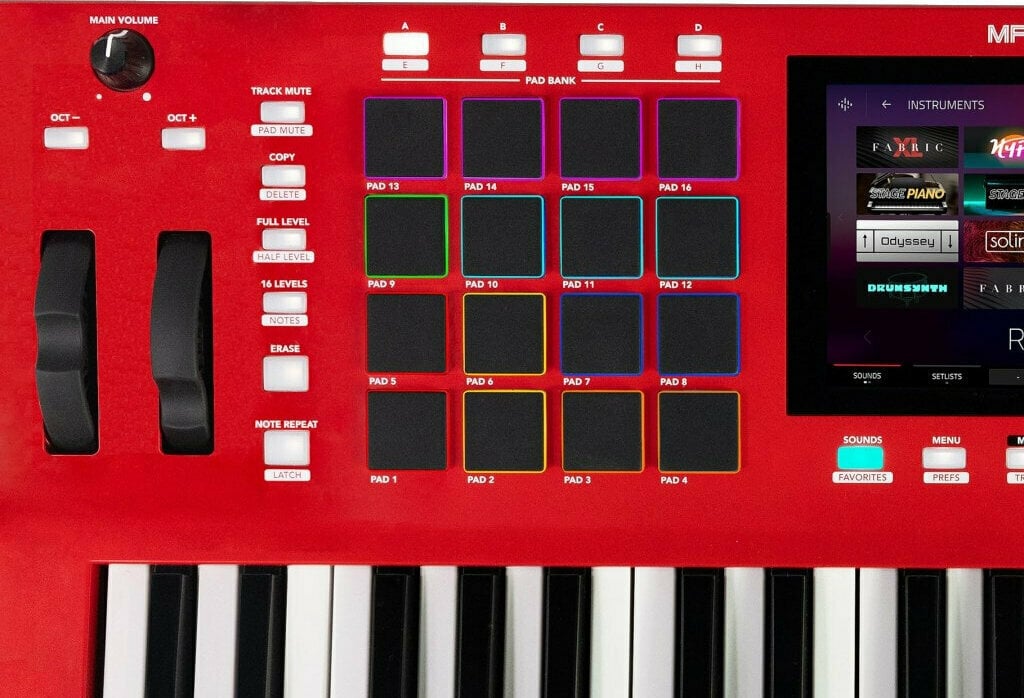
Number of Keys: 37
This instrument has 37 keys, equivalent to 3 octaves, providing a wide range of tones for a variety of musical applications.
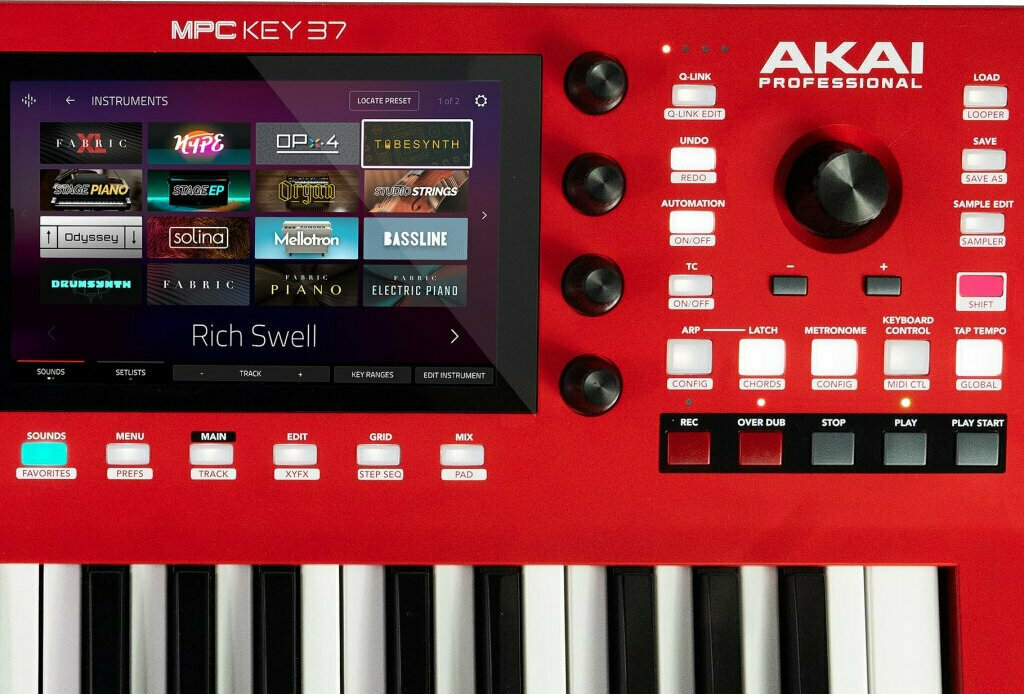
Aftertouch: Yes
Aftertouch technology on the keys allows musicians to add a new level of expression to their playing. When a key reaches the bottom of its stroke, the pressure exerted on the key can continue to be sensed and used to control various aspects of the sound, such as vibrato, volume, or tone modulation.
Polyphony: Yes
The polyphony of this instrument allows up to <%=tp_value % notes to be played simultaneously, providing rich and complex musical possibilities.
LFO: Yes
An LFO, or low frequency oscillator, brings electronic sound to life. It adds movement and interest to synthetic sounds and effects, playing an important role in both subtle synthesis and bold sound design. However, you won't hear the LFO itself because it acts as a modulator. This means that it does not directly affect the audio signal, but adjusts other parameters such as oscillator pitch and filter clipping.
Envelope: Yes
The Envelope filter gives you precise control over the dynamics and shape of the sound. This filter provides greater flexibility in adjusting and customizing sound characteristics, enhancing the overall quality and expressiveness of the performance.
Oscillators: Yes
A powerful oscillator system allows users to create rich and variable sound textures. Oscillators can generate a variety of waveforms, including sine, square, triangle, and noise, allowing for creativity and experimentation.
Pitch Bend: Yes
The Pitch Bend allows smooth pitch changes, adding expressiveness to musical expression. Often used to create effects such as glissando or vibrato, this feature allows the player to make subtle or dramatic changes to the sound in real time. Pitch bend allows musicians to create smooth transitions between notes, increasing the dynamics and expressiveness of their performances.
Modulation: Yes
Modulation allows you to change different aspects of the sound in real time, opening up a wide range of creative possibilities. For example, it can affect the pitch of the sound, creating a vibrato effect, or it can change the amplitude of the signal, creating a tremolo effect. It can also adjust filtering to create smooth transitions between frequency bands and dynamic textures. Modulation can also be used to change the character of the sound depending on the time or intensity of playing, giving the sound a lively and moving character.
Sequencer: Yes
The sequencer provides musicians with a tool for composing and arranging music, allowing them to create and edit musical sequences. This feature allows you to record and play back repeating patterns. This makes it easy to create complex rhythms and melodies. The sequencer also allows you to layer different musical elements on top of each other, sync with other devices, and adjust parameters in real time. This flexibility makes the sequencer an invaluable tool for producing music, experimenting with new sounds and creating original compositions.
Arpeggiator: Yes
The Arpeggiator transforms chords into sequences of individual notes played in various rhythmic and melodic patterns. Instead of playing the chords as a harmonic whole, the Arpeggiator breaks the chords into individual notes and plays them sequentially according to the selected algorithm.
Headphone Output: Yes
The headphone output allows direct connection of headphones for private listening. This output provides a convenient way to enjoy the sound without disturbing others or ambient noise.
Inputs
- MIDI IN
- Jack 6,3 mm TRS
- Pedal
- SD Card
- USB
Outputs
- CV/Gate OUT Jack 3,5 mm TS
- USB
- Jack 6,3 mm TRS
- Headphone Jack 6,3 mm TRS
- MIDI OUT
Pedal Inputs: Yes
The pedal input allows you to connect an external pedal that expands the instrument's control capabilities and contributes to a richer musical expression, increasing flexibility and expressiveness when playing and creating music.
MIDI Interface: Yes
It supports MIDI, allowing you to connect and communicate with other MIDI-compatible devices. This feature extends control and integration into the larger music environment, increasing flexibility and creativity in music creation.
Bluetooth: Yes
Integrated Bluetooth technology enables wireless connectivity and easy pairing with a wide range of compatible devices. This connection method ensures convenient and efficient use without cables, contributing to greater flexibility and ease of use.
Package Contents
- Adapter
- USB Cable

Тype
Desktop Synthesizer
Keyboard Technology
Synth-action
Aftertouch
LFO
Envelope
Yes
Oscillators
Modulation
Arpeggiator
MIDI Interface
Bluetooth
Built-in Speaker
Touch Sensitive
Number of Keys
Keyboard Type
Synth Action
Key Size
Standard
Polyphony
Pitch Bend
Yes
Storage Medium
Display
Display Type
Colour
Headphone Output
Inputs
Outputs
Jack 6,3 mm TRS (2 x), MIDI OUT, USB, CV/Gate OUT Jack 3,5 mm TS (4 x), Headphone Jack 6,3 mm TRS
Pedal Inputs
USB MIDI
USB to Device
USB to Host
Filter
Yes
Sequencer
Yes
Width (cm)
58.2
Height (cm)
31.3
Depth (cm)
10.3
Net Weight (kg)
4


Documents
Instructions for use
Manufacturer information
Safety instructions
Please refer to the user manual for the specific safety instructions for this product.


