Albania
 Argentina
 Australia
 Austria
 Belgium
 Bosnia and Herzegovina
 Brazil
 Bulgaria
 Canada
 Chile
 Colombia
 Croatia
 Czech Republic
 Denmark
 Estonia
 Finland
 France
 Germany
 Greece
 Hungary
 Ireland
 Italy
 Latvia
 Lithuania
 Luxembourg
 Mexico
 Moldova
 Montenegro
 Netherlands
 New Zealand
 North Macedonia
 Norway
 Philippines
 Poland
 Portugal
 Romania
 Serbia
 Slovakia
 Slovenia
 South Africa
 Spain
 Sweden
 Switzerland
 Turkey
 Ukraine
 United Kingdom
 United States of America



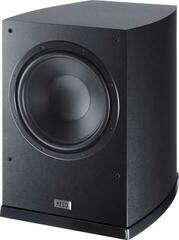
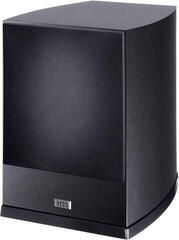
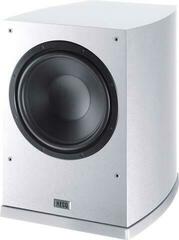
Hi-Fi Subwoofers
A Hi-Fi subwoofer extends sound reproduction into the low frequencies and can help create a more balanced listening experience for both music and movie sound. However, choosing one involves more than checking a single specification: connection options, settings, room characteristics, and integration with the main speakers all matter. Correct placement and careful fine-tuning are often just as important as the model itself. The following recommendations will help you choose a compatible solution without creating unsupported expectations.
Hi-Fi subwoofers and their role in a system
A subwoofer is a speaker designed to reproduce low frequencies. In a stereo system, it can extend the range that the main speakers reproduce only to a limited degree, although the result depends on the particular system, room, and settings. The aim does not have to be the strongest possible bass, but rather a smooth transition from the main speakers without distracting boom or an easily identifiable bass source.
An active subwoofer contains its own amplifier and generally offers controls for adapting it to the system. A passive subwoofer requires suitable external amplification, and its connection must match the capabilities of both the amplifier and the complete system. Before buying, check the type of device, the available inputs, and how its volume is controlled.
Connecting to the amplifier and speakers
First, check the outputs on your Hi-Fi amplifier or preamplifier. An output marked for a subwoofer or a low-level preamplifier output connects to the corresponding line-level input on the subwoofer. Some models support a stereo line input, while others have a separate input intended for a subwoofer signal. If the devices provide speaker-level connections only, you need a subwoofer with a compatible high-level input and must wire it according to the manufacturer's instructions.
Do not rely on connectors having a similar shape. Check what signal the output provides, whether its level changes with the main volume, and where the crossover frequency is set. If you use a complete Hi-Fi system, check the documentation for all of its components. When combining it with Hi-Fi speakers, consider how they actually behave in the room and do not automatically start with an extreme subwoofer setting.
| Connection method | What to check | What to watch out for |
|---|---|---|
| Subwoofer output | A matching input type and how the crossover frequency is set | Whether filtering is controlled by the amplifier, the subwoofer, or both devices |
| Line output | Whether the output level is controlled by the main volume | A fixed level may require separate volume adjustment |
| High-level connection | Support on the subwoofer and the wiring specified by the manufacturer | Do not confuse a speaker-level signal with a line input |
| Wireless connection | Mutual compatibility of the transmitter, receiver, and connectors | Wireless functionality is not automatically compatible across different systems |
Positioning the subwoofer in the room
Low frequencies are strongly affected by the room's dimensions, the positions of walls, corners, and furniture, and the listening position. Moving the subwoofer can alter bass consistency without any change to its electronic settings. A corner or a position close to a wall may boost the bass in certain places, but it can also encourage uneven resonances. There is therefore no universally suitable position.
Start in a practical position near the front of the system and listen from your usual listening position. Then move the subwoofer in small steps and compare the same familiar recordings at a similar volume. Listen for the smoothness of the bass notes, not just their quantity. If one note is noticeably strong and another weak, first try changing the position of the subwoofer or your listening position before making more substantial adjustments to the settings.
Provide a stable surface and the clearance required by the instructions, and do not block the controls, connectors, or any enclosure openings. Also ensure that the power and signal cables are routed safely. Do not place the subwoofer where it could tip over, be exposed to moisture, or create an obstruction with its cables.
Setting the crossover frequency, level, and phase
The crossover frequency determines the region in which the subwoofer blends with the main speakers. A suitable value depends on the speakers, the filtering method, and the room acoustics, so it cannot be reliably determined from the size of the enclosure alone. Start with the recommendation in the device manuals, then fine-tune the setting by ear or through measurements if you have suitable equipment.
Set the level so that the low frequencies sound like part of the complete system. If the subwoofer continually draws attention to itself during ordinary music playback, it may be set too loud or its range may overlap too much with the main speakers. The phase or polarity control helps align the response around the crossover region; compare the available positions from your listening position and keep the one that produces a smoother transition. Change only one parameter at a time, otherwise it will not be clear what caused the difference.
What to check before choosing and listening for the first time
- Check whether you need an active or passive subwoofer and what amplification the connection requires.
- Write down the exact outputs on the amplifier and inputs on the subwoofer, not just the connector names.
- Check whether the level of the relevant output follows the system's main volume.
- Find out which device will control the crossover frequency and whether the filters overlap unnecessarily.
- Choose a genuinely available location with safe access to power, suitable cable routing, and the necessary ventilation.
- Read the manuals before making a speaker-level connection or changing the polarity.
- Set a low volume when switching on for the first time and increase it gradually.
- Compare the same recordings from your usual listening position.
- Try several positions in the room before attempting to correct unevenness simply by increasing the volume.
- Fine-tune the level, crossover frequency, and phase one step at a time and keep a record of your changes.
- Check the result at both quiet and normal listening levels and with several familiar recordings.
- After completing the setup, secure the cables and keep the controls accessible for later adjustments.
How to assess the result
A well-integrated subwoofer does not have to draw attention to itself. Check whether the system reproduces low notes smoothly, whether the bass avoids masking the midrange, and whether the character of the sound changes disruptively when you move between normal positions in the listening area. Recordings vary in their low-frequency content, so do not judge the setup from a single track. If you change the position of the speakers, furniture, or listening position, check the subwoofer's basic settings again.