 Albania
 Argentina
 Australia
 Austria
 Belgium
 Bosnia and Herzegovina
 Brazil
 Bulgaria
 Canada
 Chile
Chile
 Colombia
 Croatia
 Czech Republic
 Denmark
 Estonia
 Finland
 France
 Germany
 Greece
 Hungary
 Ireland
 Italy
Italy
 Latvia
 Lithuania
 Luxembourg
 Mexico
 Moldova
 Montenegro
 Netherlands
 New Zealand
 North Macedonia
 Norway
 Philippines
 Poland
 Portugal
 Romania
 Serbia
 Slovakia
 Slovenia
 South Africa
 Spain
Spain
 Sweden
 Switzerland
 Turkey
 Ukraine
 United Kingdom
 United States of America



Guitars Strings | page 4
Guitar strings affect tone, playing comfort and tuning stability. Choose them primarily by guitar type, material, gauge and tuning rather than by the name of the set alone. Electric, acoustic and classical guitars need different strings, and these are not interchangeable. A well-chosen set should also suit your technique and experience.
Start by choosing strings for your guitar type
| Instrument | What to consider |
|---|---|
| Electric guitar | Lighter sets are easier to bend and tend to feel softer. Heavier strings feel firmer and maintain tension better in lower tunings. |
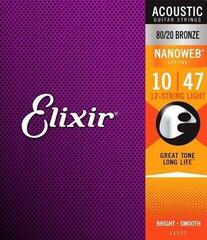
| Acoustic guitar | The winding material changes the tone; you should also choose a gauge that both the instrument and player can handle comfortably. |
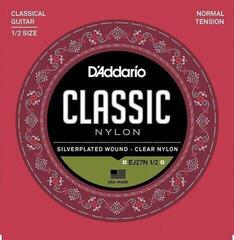
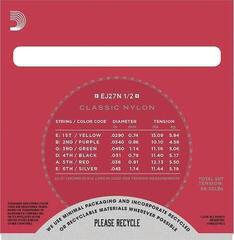
| Classical guitar | It uses nylon strings with suitable tension and fastening. Do not fit steel strings to a classical guitar, as its construction is generally not designed for them. |
Material, gauge and playing feel
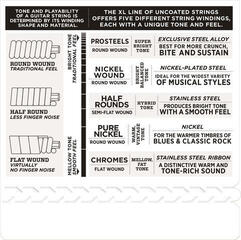
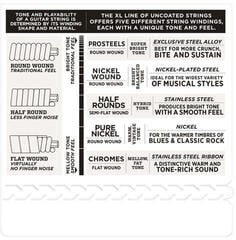
Electric guitar strings generally have a steel core with a nickel- or steel-based winding. Acoustic sets most often use bronze alloys, while a classical guitar needs nylon treble strings and wound bass strings. Always choose the material together with the instrument type rather than in isolation.
The numbers .009, .010, .011 and .012 indicate the diameter of the thinnest string in inches. A lower number usually means a softer feel and easier bends, while a higher number provides firmer resistance. Compare these markings only between sets for the same type of instrument; for nylon strings, use low, normal or high tension as your guide.
Tuning and set construction
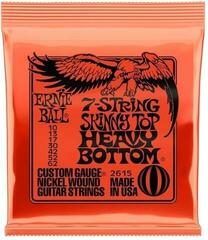
For standard tuning, the gauge you currently use is a sensible starting point. In lower tunings, a heavier set can reduce an overly loose feel, although a substantial gauge change may require adjustments to the nut slots, intonation and neck setup. Check the string count too: six-, seven- and twelve-string guitars use different sets.
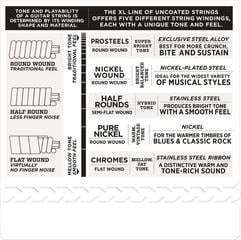
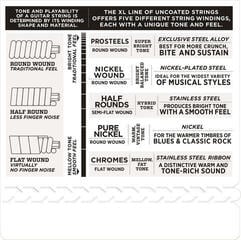
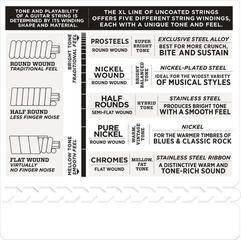
Standard roundwound strings have a more pronounced winding texture. Flatwound guitar strings have a smoother surface and a more muted character, making them suitable for players who want less finger noise when changing position. Before replacing a set, check the instrument’s scale length and the string end – either a metal ball end or a tie at the bridge.
What suits a beginner and an experienced player?
Beginners usually benefit from a set with comfortable resistance that allows them to practise without unnecessary strain on the hand. More experienced players can choose more precisely according to their technique, tuning and preferred tone. There is no universally best set: change one parameter at a time so that you can judge its effect.
Replace the whole set or one string?
If the strings sound dull, become difficult to tune, show corrosion or feel inconsistent, replace the whole set. A single string is useful when one string in a relatively new set breaks unexpectedly, but its material and gauge must match. A string winder speeds up the job; after fitting new strings, stretch them gently and retune the guitar several times.

How to choose guitar strings?

How to change guitar strings
Deals & Coupons: Guitars Strings

Strings for Electric Guitar

Strings for Acoustic Guitar

Nylon Strings for Classical Guitars

Miscellaneous Strings
Single Strings for Guitar
String Winders

Strings for Ukulele

Strings for Mandolin

Strings for Banjo

Flatwound Guitar Strings