 Albania
 Argentina
 Australia
 Austria
 Belgium
 Bosnia and Herzegovina
 Brazil
 Bulgaria
 Canada
 Chile
Chile
 Colombia
 Croatia
 Czech Republic
 Denmark
 Estonia
 Finland
 France
 Germany
 Greece
 Hungary
 Ireland
 Italy
Italy
 Latvia
 Lithuania
 Luxembourg
 Mexico
 Moldova
 Montenegro
 Netherlands
 New Zealand
 North Macedonia
 Norway
 Philippines
 Poland
 Portugal
 Romania
 Serbia
 Slovakia
 Slovenia
 South Africa
 Spain
Spain
 Sweden
 Switzerland
 Turkey
 Ukraine
 United Kingdom
 United States of America



Distortions | page 4
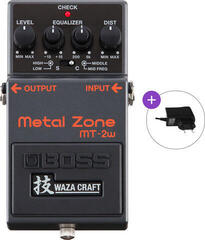
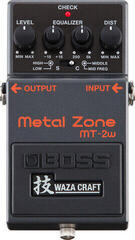
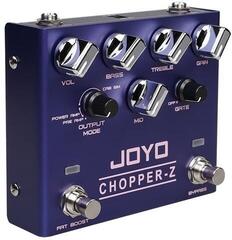
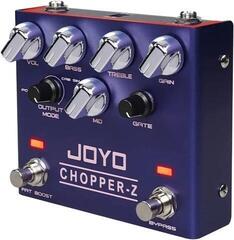
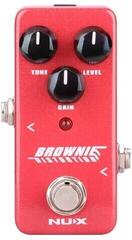
Distortion effects produce firm, pronounced and more compressed guitar distortion without relying on an overdriven tube amp. They can serve as the main distorted channel for riffs, power chords and solos. Compared with overdrive, they usually offer more gain, harder edges and a more even response to picking strength. Choose by distortion character, EQ range and whether you play through a clean or already driven amp.
Which distortion fits your sound
Hard rock and punk usually benefit from medium to high gain with clear mids. Chords stay intelligible and the guitar remains present in the band. For metal tunings, tight low end, quick attack and effective EQ matter more than gain alone. Lead playing benefits from sustain and smooth highs.
Distortion also works at lower gain. Moderate gain, more level and open EQ create energetic rock crunch. Overdrive reacts more strongly to touch and the guitar volume; distortion is preferable when you need a consistent sound from a clean amp.
Controls that matter
- Gain or distortion: sets saturation and compression; too much can blur chords and raise noise.
- Level or volume: matches bypassed and effected volume and can provide solo headroom.
- Tone: balances a darker or brighter sound with one control.
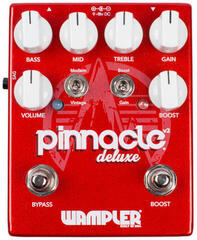
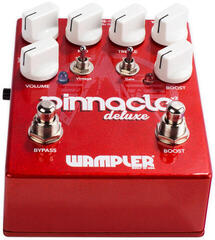
- Multi-band EQ: separate bass, mids and treble adapt the pedal to different amps and tunings.
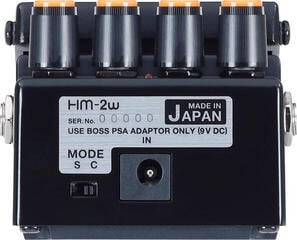
- Mode switches: may alter clipping, gain range, bass response or overall colour.
Humbuckers drive distortion sooner, so moderate gain and bass control can help. Single coils sound more open but may reveal more hum at high gain. For seven-string or down-tuned guitars, avoid excessive bass before distortion so riffs stay defined.
Comparing related gain effects
| Effect | Response and texture | Best use |
|---|---|---|
| Distortion | Firm, compressed, higher-gain distortion | Main distorted sound, heavy riffs and sustain |
| Overdrive | Softer clipping and greater touch response | Blues and rock drive or pushing an amp |
| Fuzz | Coarse, grainy or disintegrating texture | Garage, stoner, psychedelia and unconventional tones |
| Booster | Higher signal level with little or no compression | Solos or driving another gain stage |
Distortion at home, rehearsal and on stage
Your first distortion pedal
With a good clean channel, distortion creates a separate rhythm sound without amp channel switching. A clear gain, tone and level layout is a sensible start. Fast volume matching and an articulate tone matter more than many options.
Band and live playing
A tone set alone behaves differently in a mix. Heavy bass and scooped mids may sound huge at home but disappear beside bass and drums. Set EQ at rehearsal volume and add gain only while attacks remain distinct; a booster may lift a solo better than more gain.
Recording
Leave room for articulation. Two separately recorded guitars with moderate distortion often sound wider and clearer than one track at maximum gain. Compare modes at equal output level so loudness does not mislead you. Distortion normally goes before modulation, delay and reverb. A booster or overdrive before it can tighten attack and reshape the frequency balance; reversing the order changes compression and level. High gain reveals pickup hum, power noise and earlier devices, so check voltage, polarity and current draw.
Connection and practical details
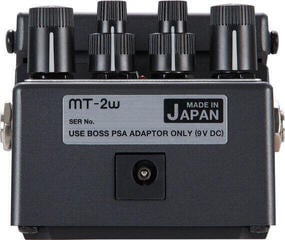
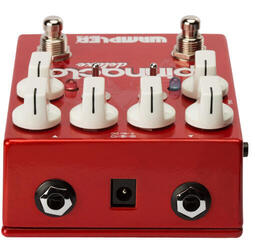
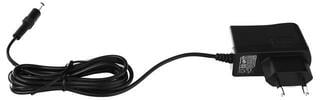
Distortion normally goes before modulation and ambience effects. A booster or overdrive before it can reshape attack and frequency balance, and reversing two gain pedals changes the result. High gain also reveals noise from pickups, power and earlier devices, so check voltage, polarity and current draw. Set the sound at real band volume. Heavy bass and scooped mids can sound huge alone but lose definition beside bass and drums. Add gain only while individual attacks and chord notes remain clear. For a prominent solo, a separate booster is often more effective than increasing distortion again.
Choose a distortion that reaches the desired sound with controls in a usable range and leaves room for adjustment. Tight bass, workable mids and a gradual gain range matter more than an extreme maximum setting. When recording, leave room for articulation. Two separate guitars with moderate gain often create a wider and clearer result than one track at maximum. Compare pedal modes at equal output level. A useful distortion reaches the desired tone with controls in a sensible range and leaves adjustment room for bass, mids and treble.