 Albania
 Argentina
 Australia
 Austria
 Belgium
 Bosnia and Herzegovina
 Brazil
 Bulgaria
 Canada
 Chile
Chile
 Colombia
 Croatia
 Czech Republic
 Denmark
 Estonia
 Finland
 France
 Germany
 Greece
 Hungary
 Ireland
 Italy
Italy
 Latvia
 Lithuania
 Luxembourg
 Mexico
 Moldova
 Montenegro
 Netherlands
 New Zealand
 North Macedonia
 Norway
 Philippines
 Poland
 Portugal
 Romania
 Serbia
 Slovakia
 Slovenia
 South Africa
 Spain
Spain
 Sweden
 Switzerland
 Turkey
 Ukraine
 United Kingdom
 United States of America



Meditation and Music Therapy
The music therapy and meditation category brings together sound and ritual percussion for meditation, yoga, sound baths, school activities and relaxed home use. It includes meditation instruments with gentle sustain, rhythmic tools and strongly resonant instruments that help create an atmosphere and guide attention toward listening. This description is a buying guide, not a health promise: the choice is therefore based on sound, control, size and practical use.
How to choose an instrument for music therapy and meditation
First decide whether you want a calm tone for quiet meditation, a steady rhythm for movement, or an instrument with strong resonance for a group experience. Beginner-friendly options include singing bowls, kalimbas and tongue drums, because they can be played without complex technique. Gongs, handpans and larger ritual instruments offer a broader sound space, but they need more room, more sensitive dynamics and often suitable mallets or a stand.
Calm tone, rhythm or strong resonance?
- For slow breathing, relaxation music and opening a session, choose bowls, kalimbas, chimes and energy bells.
- For rhythm in a group or school setting, use shakers, hand drums, jingle bells, finger cymbals and rainsticks.
- For long sustain and a dramatic sound layer, consider gongs, handpans, tongue drums and selected ritual instruments.
Differences between the most common instruments
| Instrument | Sound and use | Best suited for |
|---|---|---|
| Singing bowls | Stable tone, soft attack and longer sustain when struck or circled with a mallet. | Beginners, yoga, short meditation practice and quiet home use. |
| Gongs | Wide dynamics, broad spectrum and strong resonance in the room. | Sound baths, studios, group sessions and players who can control volume. |
| Handpans | Melodic percussion with tuned notes for atmospheric playing. | Musicians or advanced users looking for a standalone melodic instrument. |
| Tongue drums | Tuned notes, easy playing with mallets or fingers and a calm character. | Beginners, children, school, home relaxation and meditation accompaniment. |
| Kalimbas | Gentle metallic tone, small size and low volume. | Travel, evening playing, simple melodies and a subtle sound background. |
| Ritual instruments | Bells, cymbals, tuning forks, didgeridoo and effects for opening, transition or ending. | Instructors, facilitators, teachers or players building several sound layers. |
For beginners, yoga, sound baths or home relaxation
When buying a first instrument, focus on ease of control and room volume. For yoga and slow guided practice, the soft sound of a bowl, bell, kalimba or tongue drum works well; in a group sound bath, the projection of a gong, handpan or a combination of effects matters more. In schools, families or therapy-oriented settings without medical claims, practical instruments are those that respond immediately and do not require precise hand technique. To complete the set, consider tuning forks, mallets, cases and stands.
What to consider when choosing
- Size and portability: a small kalimba or bowl is easy to carry, while a gong and stand need stable space.
- Tuning and scale: choose a handpan or tongue drum by scale; for group playing, check whether it fits other instruments.
- Sustain and volume: long sustain is impressive in a hall but may be intrusive in an apartment.
- Mallets and cases: mallet softness changes the tone attack, while a case helps with transport and surface protection.
- Purpose: for meditation music, look for a pleasant tone and dynamic control; for ritual or stage effect, sound character and visual presence may matter more.
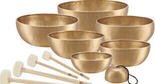
Deals & Coupons: Meditation and Music Therapy
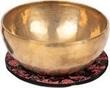
Singing Bowls
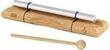
Energy Chimes
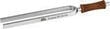
Tuning Forks
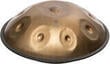
Handpans / Steel Tongue Drum
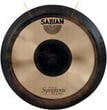
Gongs
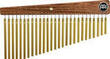
Chimes
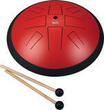
Tongue Drums

Kalimbas
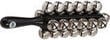
Sleigh Bells
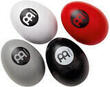
Shakers
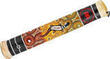
Rainsticks
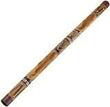
Didgeridoo
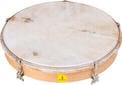
Hand Drums
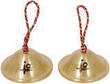
Finger Cymbals

Ritual Instruments
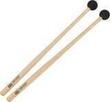
Percussion Sticks