 Albania
 Argentina
 Australia
 Austria
 Belgium
 Bosnia and Herzegovina
 Brazil
 Bulgaria
 Canada
 Chile
Chile
 Colombia
 Croatia
 Czech Republic
 Denmark
 Estonia
 Finland
 France
 Germany
 Greece
 Hungary
 Ireland
 Italy
Italy
 Latvia
 Lithuania
 Luxembourg
 Mexico
 Moldova
 Montenegro
 Netherlands
 New Zealand
 North Macedonia
 Norway
 Philippines
 Poland
 Portugal
 Romania
 Serbia
 Slovakia
 Slovenia
 South Africa
 Spain
Spain
 Sweden
 Switzerland
 Turkey
 Ukraine
 United Kingdom
 United States of America



How to record downtuned guitars? Studio Lab
About to record hard riffs, modern metal or djent and your guitar loses intonation, pushes unwanted resonances or sounds muddy? In episode 15 of Studio Lab, Jakub Hríbik shows you step by step how to prepare and record a downtuned guitar so that even the hardest distortion sounds fat and clean. Here is the whole guide from both parts written out in points.
About to record hard riffs, modern metal or djent and your guitar loses intonation, pushes unwanted resonances or sounds muddy? In episode 15 of Studio Lab, Jakub Hríbik shows you step by step how to prepare and record a downtuned guitar so that even the hardest distortion sounds fat and clean. Here is the whole guide from both parts written out in points.
What are downtuned guitars and why they need a different approach
By downtuned we mean low-tuned guitars from drop B and below. Baritone guitars with a longer scale length are ideal for such tunings, because the greater distance between the nut and the bridge keeps a low tuning more stable. A standard 24.75-inch scale is not quite ideal for deep tunings and that is exactly why baritones came to be.
There is a simple rule. A guitar with a 25.5-inch scale will still reliably handle drop A, but I would not go lower with it. For tunings from drop D to drop C these rules are not that critical, they start to matter at drop B, B standard and below.
1. Choose the right string gauge
A standard set that is not made for drop will start to flap when you tune down. The solution is either ready-made drop sets, or a studio trick. Buy an extra thicker single strings of the same brand and series (for the same core) in addition to your strings and swap the thickest one.
A gauge tip. With each semitone of downtuning add one gauge of thicker strings. For drop A or B standard it is good to start at least on a 12 to 60 set. On his drop A guitar Jakub uses D'Addario NYXL1260 from D'Addario, which he says are the thinnest strings that still hold stability in this tuning. Do not skimp, out-of-tune cheap strings will only annoy you when recording ultra-distorted, doubled guitars.
2. Tune the guitar the way you will play
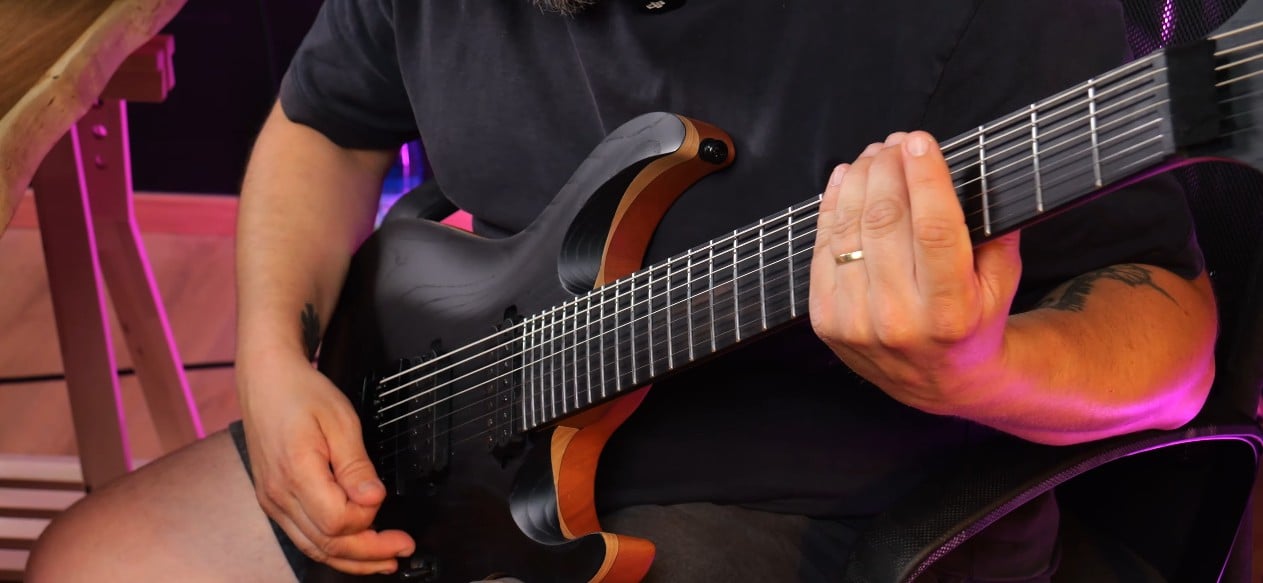
With downtuned guitars it is not enough to tune to the middle and be done. The tuning has to match the dynamics you actually play with. If you are going to play percussive chugs, tune the guitar with a hard pick attack exactly as you will play, so the tuner peak jumps to the middle right at the moment of the hit.
Conversely, when you play continuous eighths on an open string, tune more gently, matching that pull. The goal is for it to be in tune in the context of playing while recording, not on its own on the tuner.
3. Consider Evertune and prepare a tuning reference
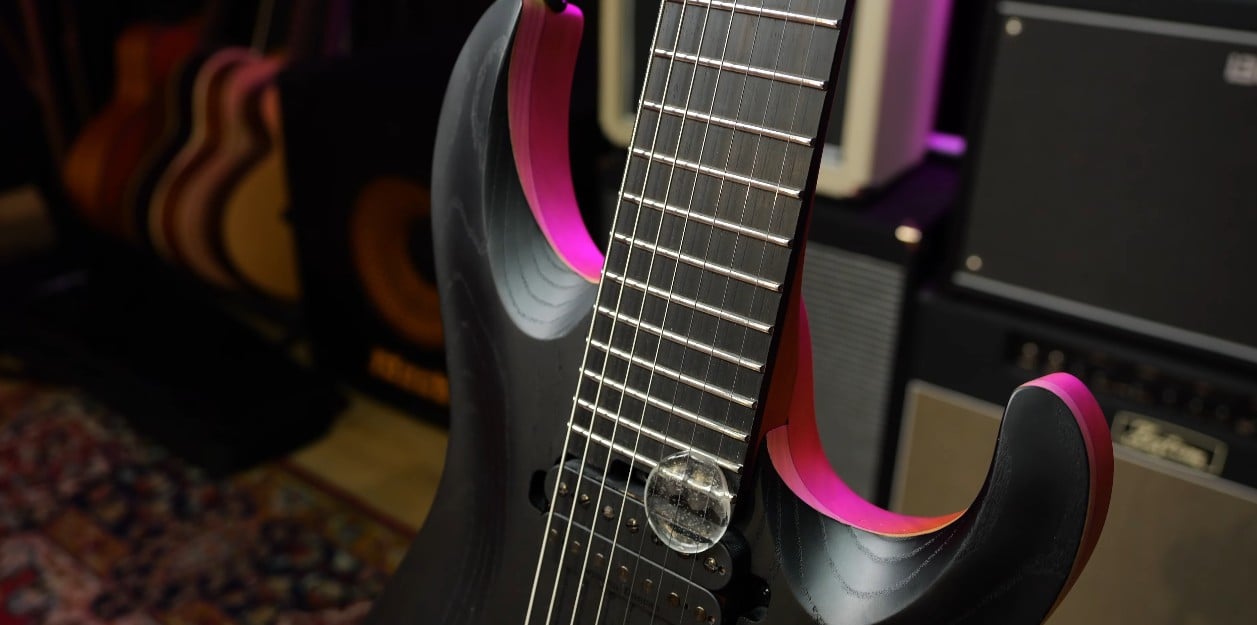
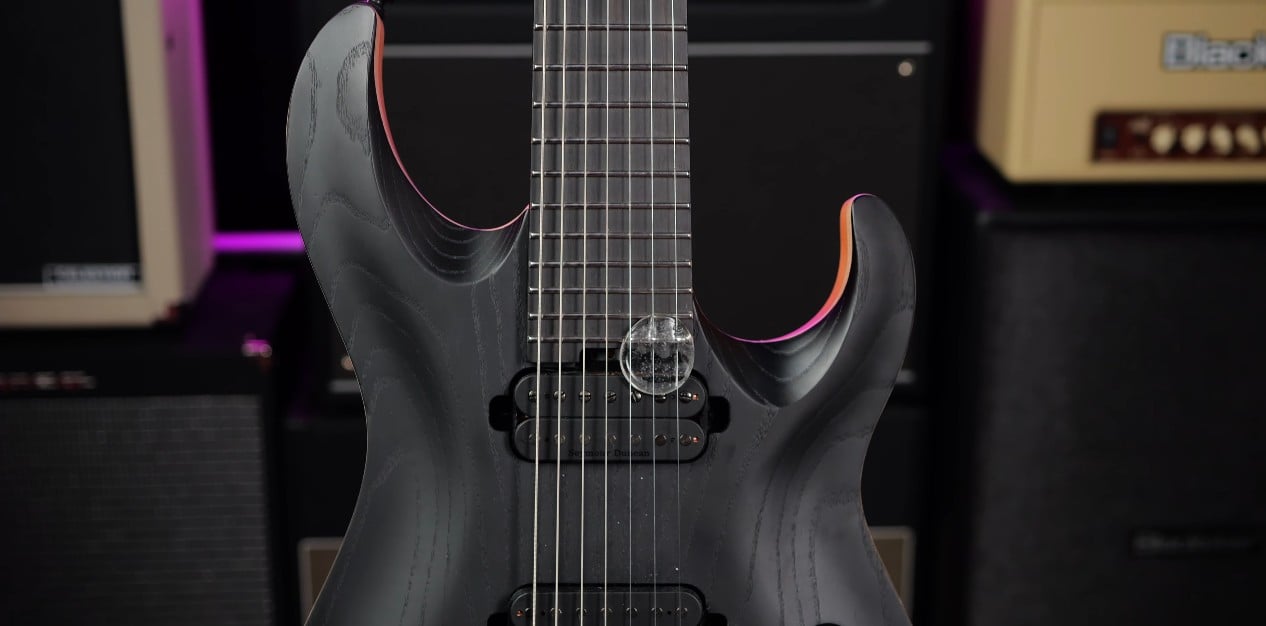
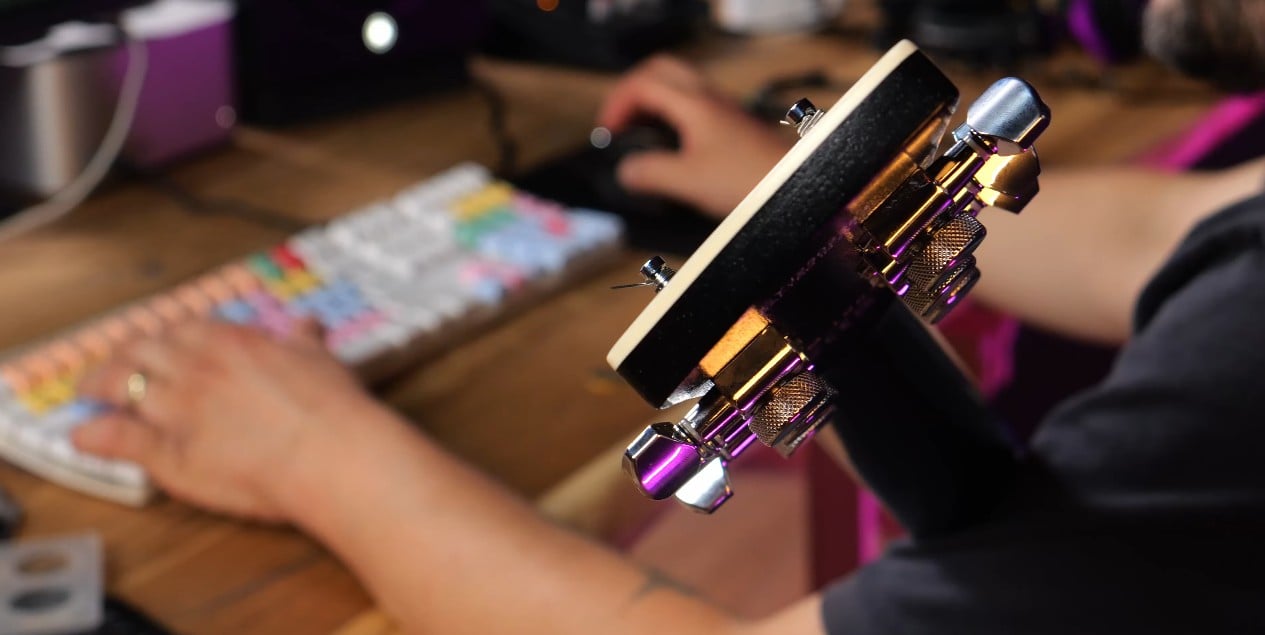
Without Evertune, tuning during recording is always a bit of hell, you have to retune before every take. The Cort KX707 with an Evertune bridge is tuned once and holds, even if you take it off the wall a year later. The system has a bend mode that holds the tuning yet allows bends, and a position that locks the strings completely.
Jakub recommends every metalhead get at least a cheaper guitar with Evertune. The only compromise is a slightly shorter sustain, which does not matter in metal. It pays to record one reference Evertune guitar, by which you instantly know that if something is out of tune, it is the other guitar.
When you do not have Evertune, record a simple mono synth pad with long notes as a tuning reference and play the riff over it. A proven trick is to play the same riff several times in a loop from one tuning and then pick, say, the first and third pass for the left and right side, since from one intensity they will match best.
4. Damp unwanted resonances
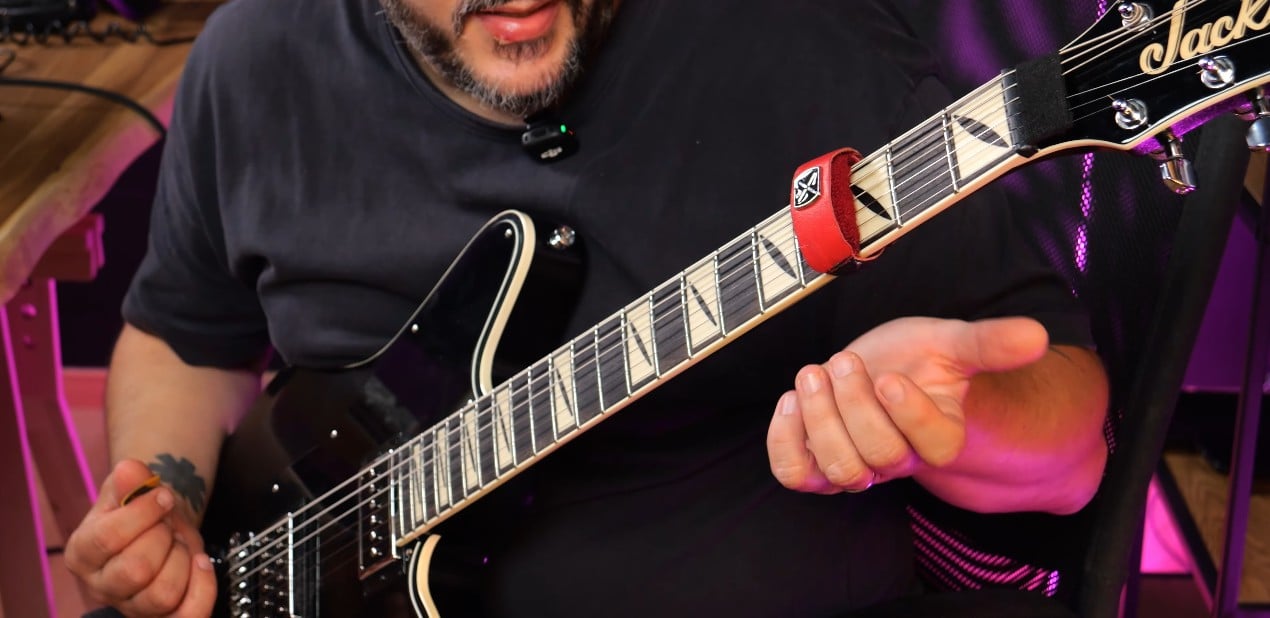
On metal guitars, string noise and overtones arise from the resonance of the strings behind the nut and at the bridge. You can get rid of them with cloth tape, a piece of foam, professional dampeners from Groove Gear or D'Addario, or the proven drummer's Moongel pads.
5. Check intonation and octaves
Before you hit record, check the octave tuning and intonation. High-gain distortion is the strictest critic, it instantly tells you when something is off when you hit an octave. This is not a chorused funky sound, but uncompromising ultra distortion that reveals every imperfection, and that is key when layering guitars.
6. Choose your pick
The pick is the first contact of your hand with the guitar and can change even 20 percent of the tone character, so do not take it lightly. Try different picks for different parts, a different pick may suit certain parts of the riff.
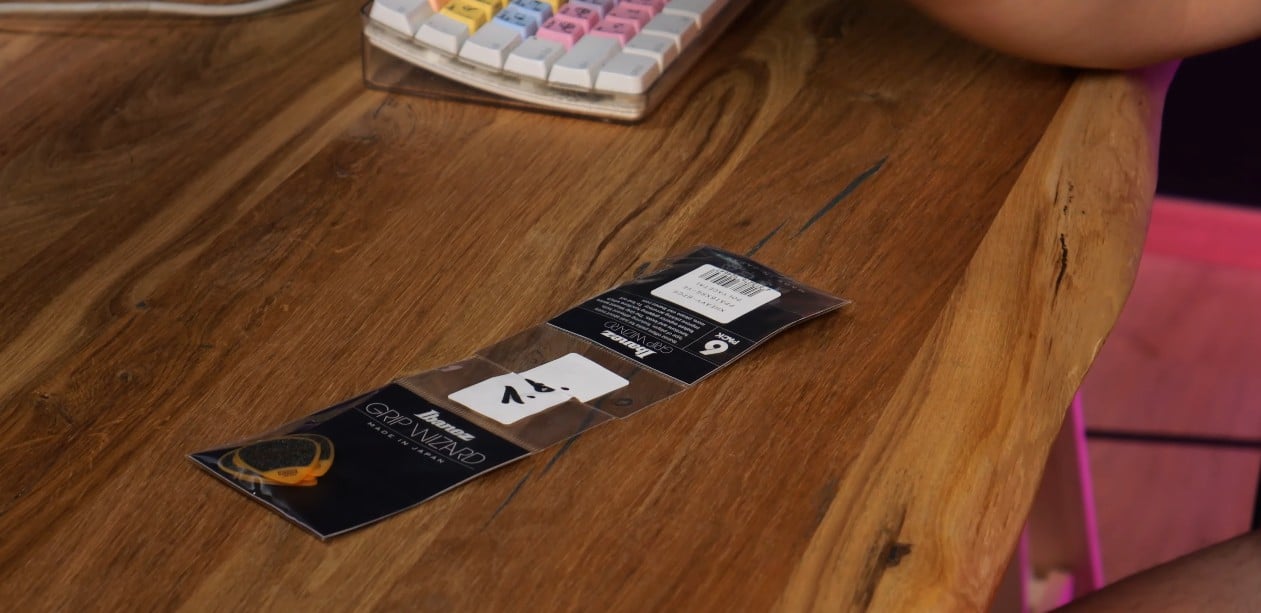
Jakub swears by Ibanez Grip Wizard, namely medium around 0.8 to 0.88 mm similar to green Tortex, and extra heavy around 1.14 mm with a sandpaper grip against slipping. He likes their attack and a tip with a slight give. Since modern metal is recorded in small pieces, a few bars at a time, feel free to use a less comfortable pick for a specific piece if it sounds better there.
7. Tune as you go and fine-tune by ear through distortion
When tuning, roll off the tone knob or switch to the neck pickup so the sound is as bassy as possible and the tuner catches the fundamental. Jakub tunes from the third string, since the lower strings jump around more on the tuner, and also uses a fine tuner on the bridge.
Always tune from below upwards, that is go under the note and pull up into it, so the teeth in the tuning machine seat against each other and the tuning holds.
Distorted sound has an advantage. When you play two strings together and the interval is not clean, you hear a beating, an oscillation. Tighten one string until the beating stops and you have a clean interval. For example two identical A notes an octave apart you fine-tune exactly by when the oscillation disappears.
8. Layer the guitars and dial in the tone
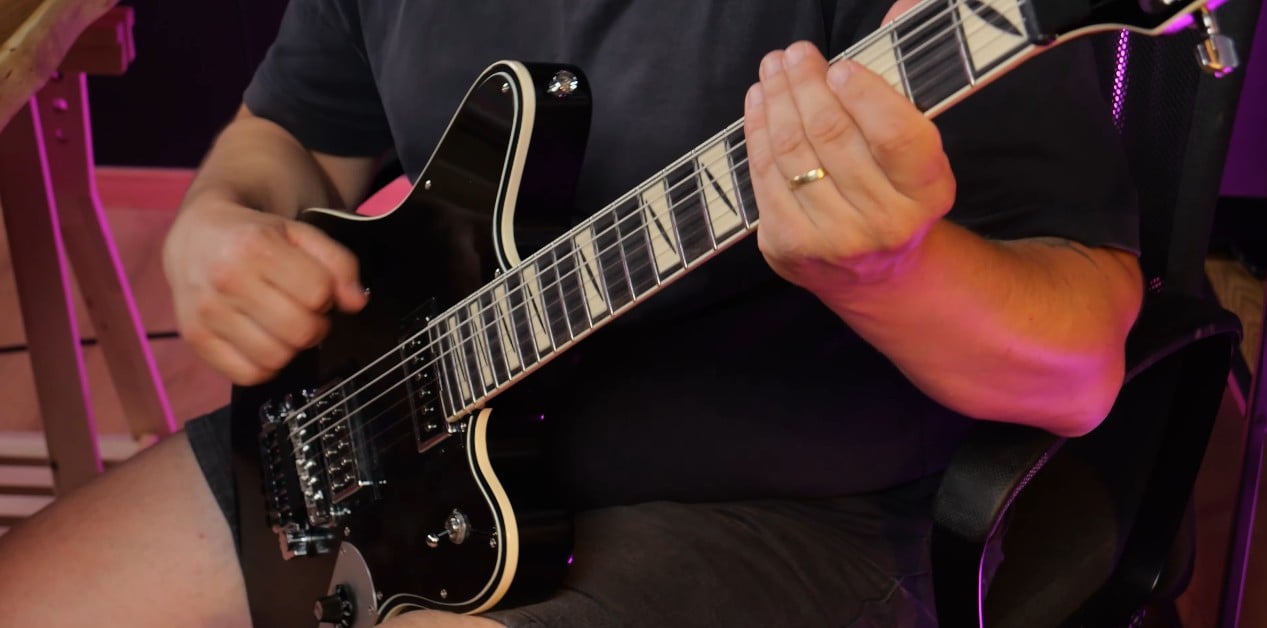
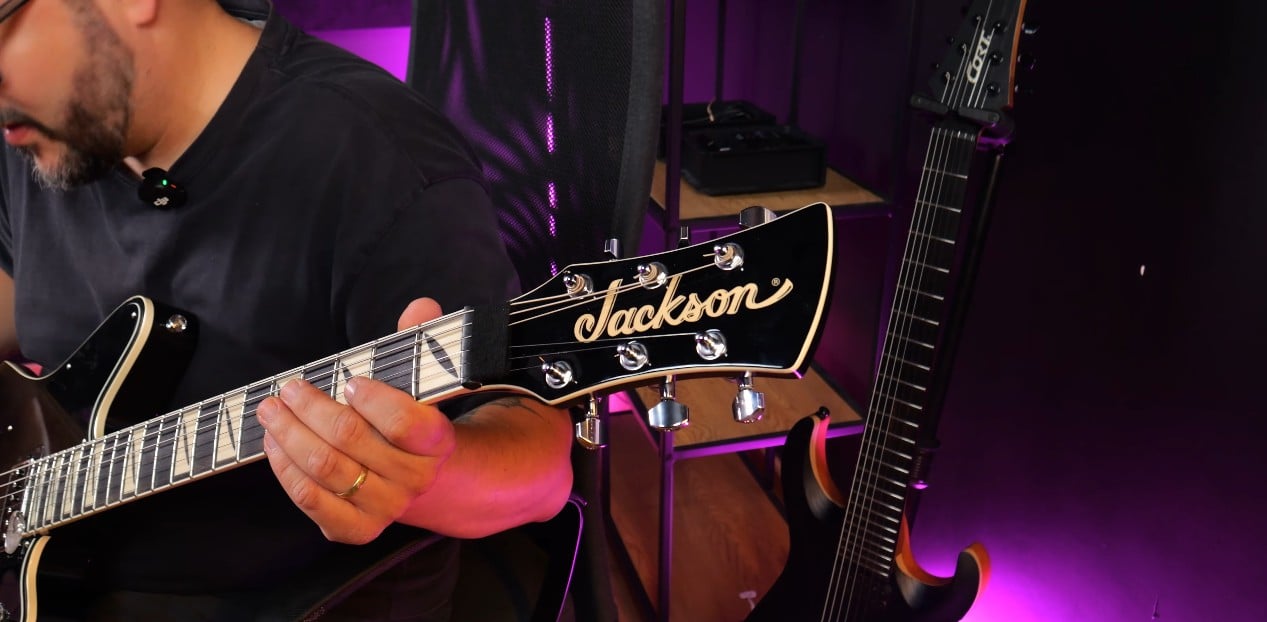
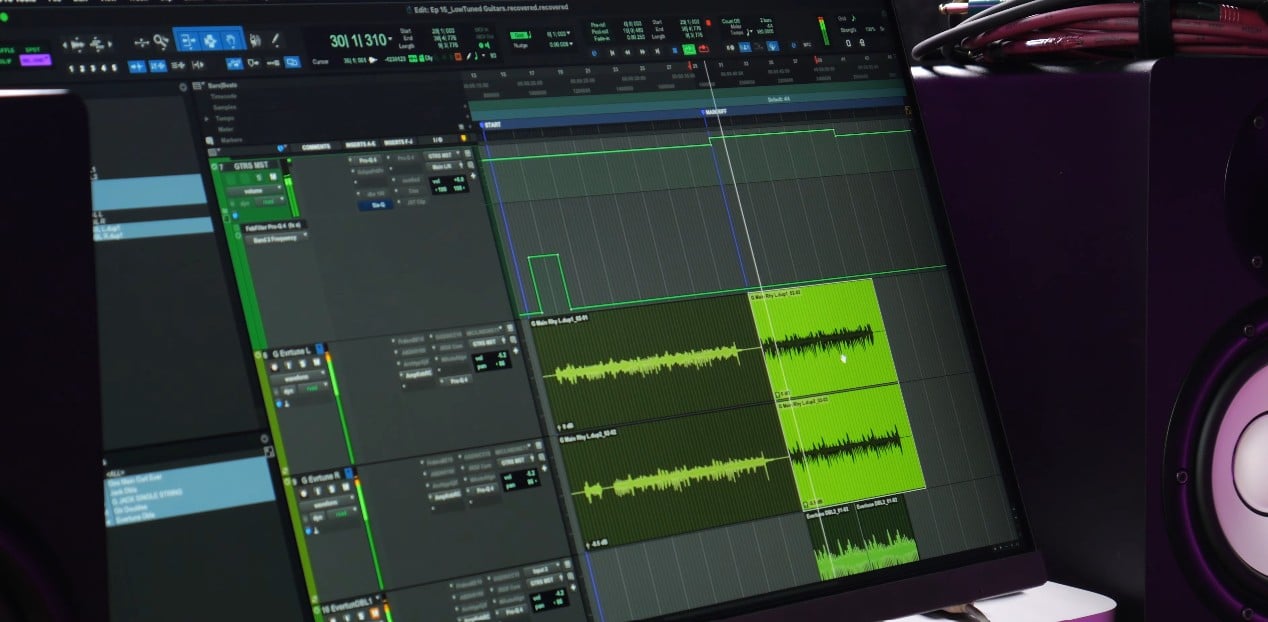
The basis is doubling. Record the riff in a loop and use different passes crosswise as the left and right track. You can also combine Evertune with a regular electric guitar, for example a Jackson Pro Series Lee Malia LM-87. Micro differences in timing and tuning between unique takes create a psychoacoustic effect of a fuller and wider sound.
A few more tone tips. A thinner string has more attack, more slap and more bass, a thicker one has more mids, so pick accordingly. Evertune holds even a 59 string on drop A, which sounds much more defined. And for readability of the riff you can add a single-string version on top.
Record your riffs
When it comes to tuning and consistency, Evertune always wins, but with good preparation you can record fat downtuned guitars even without it. Check out strings, picks, the Cort Evertune guitar and other electric guitar in our range and get to it.