 Albania
 Argentina
 Australia
 Austria
 Belgium
 Bosnia and Herzegovina
 Brazil
 Bulgaria
 Canada
 Chile
 Colombia
 Croatia
 Czech Republic
 Denmark
 Estonia
 Finland
 France
 Germany
 Greece
 Hungary
 Ireland
 Italy
 Latvia
 Lithuania
 Luxembourg
 Mexico
 Moldova
 Montenegro
 Netherlands
 New Zealand
 North Macedonia
 Norway
 Philippines
 Poland
 Portugal
 Romania
 Serbia
 Slovakia
 Slovenia
 South Africa
 Spain
 Sweden
 Switzerland
 Turkey
 Ukraine
 United Kingdom
 United States of America


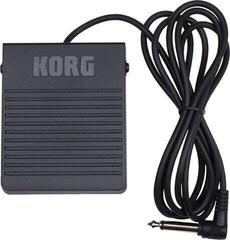
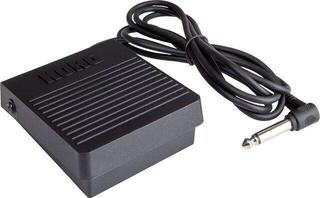
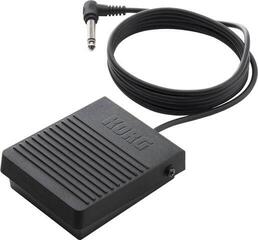
Korg Sustain Pedals
Korg sustain pedals hold notes after you release the keys. You'll use them for piano accompaniment and for playing a melody over a ringing chord. On this page you'll find the black PS3 model with a passive connection and no batteries. You'll find more pedals for your keyboard in the Korg Keyboard Pedals category.
What do you use Korg sustain pedals for when playing?
A sustain pedal lets a chord ring on while you move your hands to the next keys. With a piano sound, you can connect notes even where your fingers can't hold them. The term damper on these pedals refers to the function of the damper pedal on a piano. When practising accompaniment, release the pedal when the harmony changes and press it again with the phrase, so the notes of different chords don't blur together unnecessarily.
What decides how the pedal connects to your keyboard?
The Korg PS3 has a 6.3 mm mono jack and no polarity switch. When choosing a sustain pedal, besides the connector, what matters is which pedal type and polarity your instrument's input supports. The same plug diameter alone doesn't guarantee that it will work correctly. Look in your instrument's manual for the requirements of the sustain or damper input; that way you tell sustaining notes apart from other foot control functions and avoid choosing only by the shape of the plug.
How do you position a pedal with a 1.5 m cable?
The PS3 cable is 1.5 m long, so when setting up, plan for the whole route between the pedal on the floor and the input of your keyboard instrument. Place the pedal so you can reach it with your foot without shifting on your stool. Route the cable away from spots where a stand or stool leg could pin it down, and leave it some slack so it doesn't pull on the connector when you press the pedal.